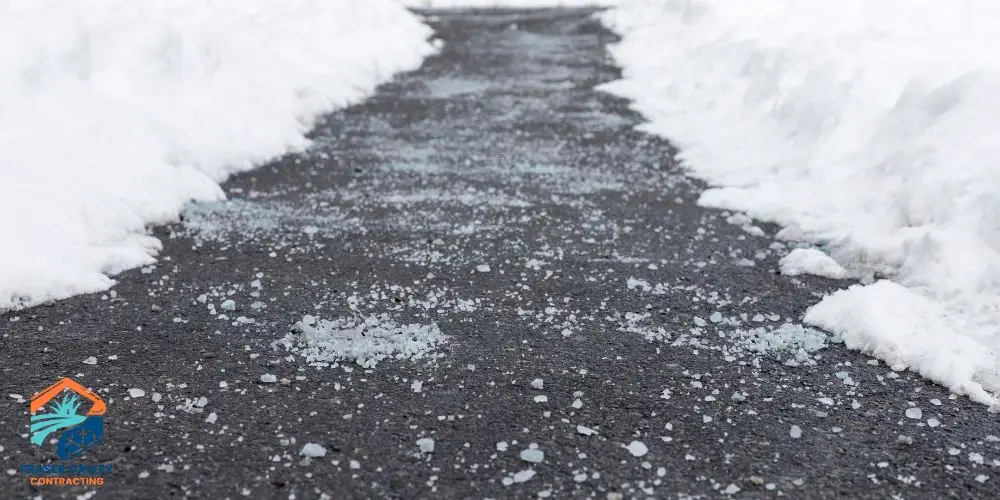
In the Fraser Valley, snowfall often gets the most attention—but it’s not the biggest winter safety risk. Freeze–thaw cycles are the real culprit behind many slip-and-fall incidents, vehicle collisions, and insurance claims on commercial and strata properties. As temperatures swing above and below zero, surfaces that looked safe hours earlier can turn into sheets of black ice without warning.
For property managers, councils, and business owners, understanding how freeze–thaw cycles work—and how to manage them—is critical to preventing accidents and liability.
Why Freeze–Thaw Cycles Are So Dangerous
When daytime temperatures rise, snow piles, slush, and residual ice begin to melt. As water moves across parking lots, sidewalks, ramps, and loading bays, it pools in low spots. Overnight, when temperatures drop again, that meltwater refreezes into hard, transparent black ice.
This cycle creates hazards that catch people off guard:
- Areas that were cleared earlier suddenly become icy again
- Shaded zones refreeze faster than exposed asphalt
- Water from poorly placed snow piles flows into walkways
- Residents and customers assume surfaces are safe and slip
Unlike snow, which is visible and predictable, black ice can be hard to spot.
The Most Common Problem Areas
Freeze–thaw hazards most often appear on:
- North-facing sidewalks and shaded walkways
- Sloped parking lots and curb ramps
- Loading docks and truck aprons
- High-traffic pedestrian zones
- Transitions at entrances and stairwells
These surfaces experience frequent meltwater runoff which allows them to trap and refreeze it.
Why Standard Plowing Isn’t Enough
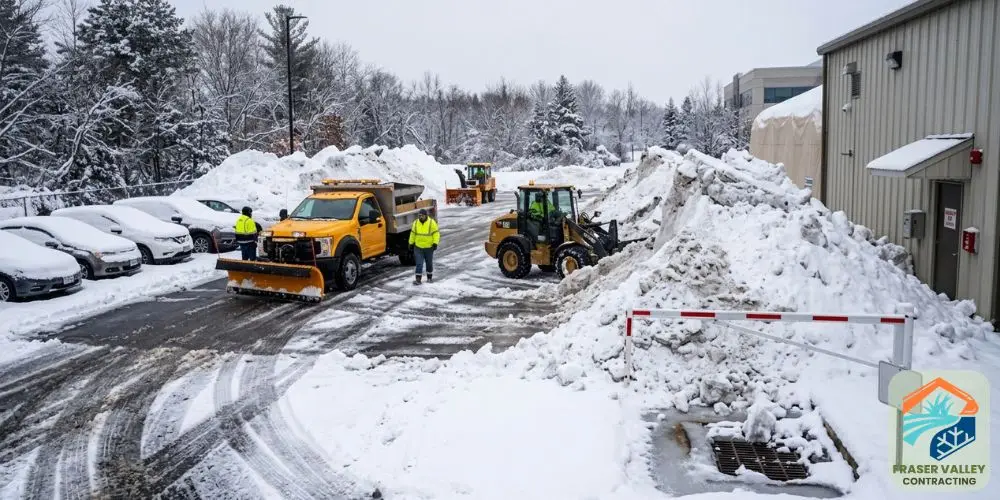
Plowing removes snow, but it doesn’t address what happens after. Once melt begins, untreated surfaces quickly become slippery again.
That’s why properties require a winter plan that goes beyond plowing, including:
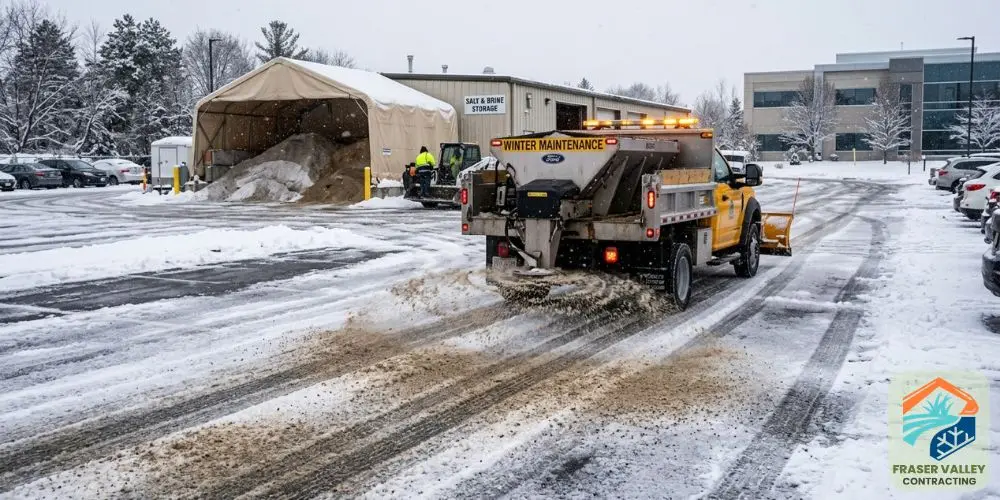
- Post-plow de-icing
- Refreeze checks after sunset
- Proper snow pile placement to control runoff
- Anti-icing treatments that prevent bonding
Without these steps, plowing alone creates a false sense of safety.
How to Protect Your Property During Freeze–Thaw Cycles
1. Use Anti-Icing Before the Cycle Starts
Applying brine (23% NaCl) before an expected temperature drop creates a barrier that helps prevent ice from bonding to the pavement.
2. Schedule Post-Storm Return Visits
A single visit isn’t enough during freeze–thaw events. Effective contractors perform follow-ups in the evening and early morning to catch refreeze.
3. Relocate Snow Piles Strategically
Snow should be piled where meltwater drains away from walkways and entrances, not toward them.
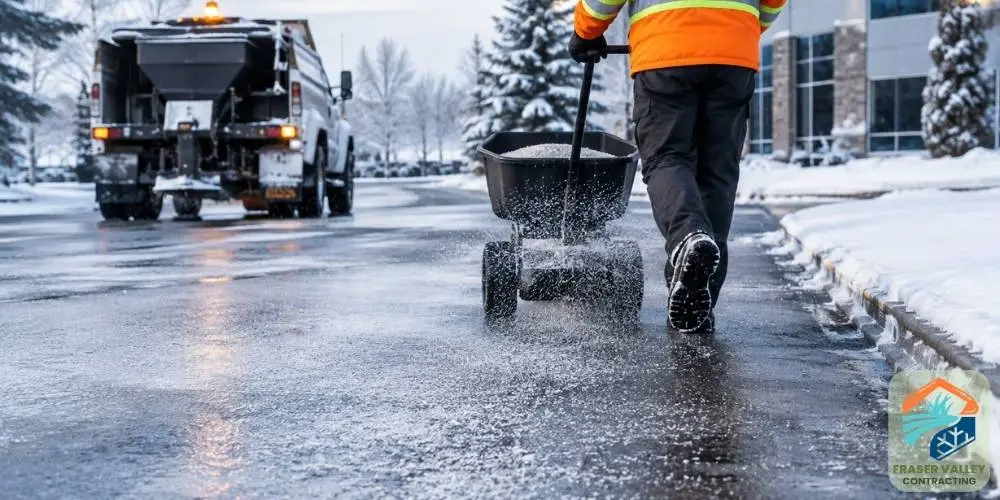
4. De-Ice High-Risk Zones
Areas like stairs, ramps, and loading docks often need spot treatments with materials such as:
- Rock salt
- Pre-wetted salt
- Calcium chloride or CMA for colder temperatures
How FVC Helps You Stay Ahead of Refreeze
Freeze–thaw cycles require a proactive, not reactive, approach. That’s why FVC provides:
- Brine-based anti-icing to prevent bonding
- Post-plow de-icing and targeted spot treatment
- Site-specific snow pile planning
- 24/7 monitoring during major temperature swings
- Digital documentation (Yeti) for every service
Our strategy ensures your property remains safe, accessible, and compliant, even during the most unpredictable winter conditions.
Protect Your Property Before the Next Freeze
Freeze–thaw cycles are unavoidable in the Fraser Valley, but accidents don’t have to be. With the right planning, treatment strategy, and contractor, you can minimize risks and keep your site winter-ready around the clock.
Partner with FVC, a team that anticipates freeze–thaw hazards and protects your property before problems begin.