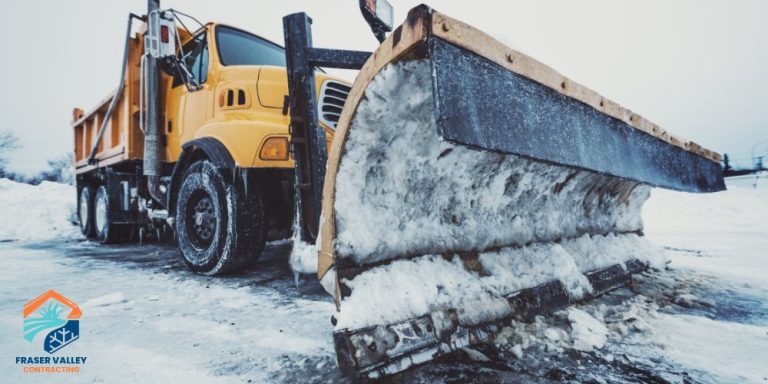
A major snowfall can change the way a property looks and functions within just a few hours. What starts as a clean layer of snow covering roads, driveways, parking areas, walkways, and open spaces can quickly become a collection of large, heavy snow piles as the snow is cleared. For property owners and managers across the Fraser Valley, the job is not necessarily finished when the pavement becomes visible again. In many cases, the next challenge is figuring out what to do with all that snow.
This is where Snow Pile Relocation becomes an important part of winter property management.
At Fraser Valley Contracting, based in Chilliwack, BC, we understand that winter conditions can create practical challenges for residential, commercial, industrial, and development properties throughout the Fraser Valley. When snow accumulates beyond what a property can comfortably hold, relocating those piles can help restore usable space, improve visibility, and reduce problems that may develop as the weather changes.
Snow Removal Does Not Always Mean the Snow Is Gone
One of the most common misunderstandings after a heavy snowfall is that snow removal means the snow has completely disappeared from the property. In reality, snow clearing often means moving the snow from one location to another.
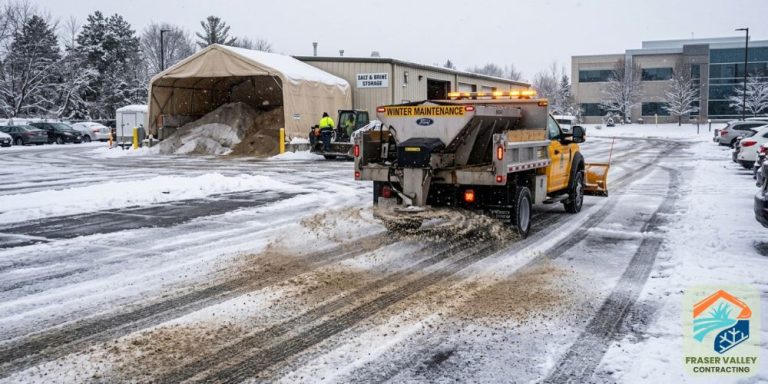
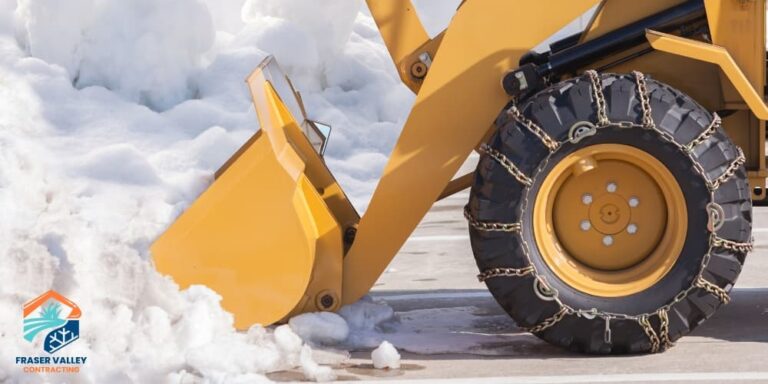
A loader, skid steer, plow, or other equipment may push snow toward the edge of a parking lot, driveway, access road, or open area. This can be an effective first step because it clears the immediate travel surface. However, after repeated snowfalls, those piles can become increasingly large.
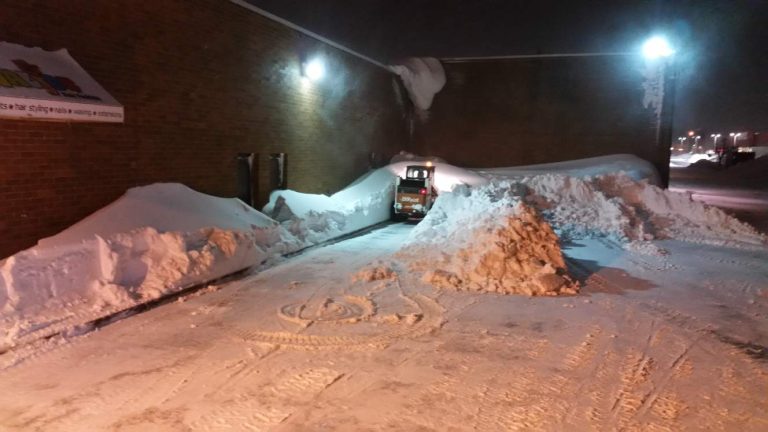
A property may start with plenty of room for snow storage, but that capacity can disappear surprisingly quickly. What was initially a manageable pile can become a large obstruction that takes up parking spaces, narrows access routes, blocks sightlines, or leaves very little room for the next snowfall.
Snow Pile Relocation addresses this problem by moving accumulated snow from temporary storage areas to a more suitable location.
For property owners, the goal is not simply to move snow for the sake of moving it. It is to keep the property functional while making room for changing winter conditions.
Why Snow Piles Become a Problem After Heavy Snow
Snow is deceptively bulky. A large pile along the side of a parking lot can occupy a significant amount of space, particularly when several snow events occur close together.
This can become especially noticeable at commercial properties where every parking space matters. A pile that takes up several stalls may not seem significant after one snowfall, but losing those spaces repeatedly throughout the winter can affect how easily customers, employees, tenants, and service vehicles move through the property.
The same issue can occur around industrial sites, construction areas, strata properties, apartment complexes, and larger residential properties.
Snow piles can also grow denser as they are repeatedly driven over, pushed, compacted, and exposed to changing temperatures. As a result, simply pushing the pile farther toward the edge may not always solve the underlying space problem.
Relocation provides an opportunity to clear these areas properly rather than continuing to build larger piles in the same locations.
Making Room for the Next Snowfall
One of the biggest reasons we see for relocating snow is simple: you need somewhere to put the next snowfall.
Winter weather rarely follows a convenient schedule. A property might receive a significant snowfall, followed by several days of freezing temperatures and then another storm. If the available snow storage areas are already full, the next snowfall has fewer places to go.
This can create a cycle where snow is repeatedly pushed into increasingly inconvenient locations.
By relocating existing piles before another major weather event, property owners can create additional space for future snow clearing. This can make subsequent snow removal more manageable and help prevent parking lots, driveways, and access areas from becoming progressively more restricted.
For properties that experience frequent traffic, planning ahead can make a noticeable difference. Instead of waiting until there is nowhere left to push the snow, relocation can be incorporated into the property’s broader winter maintenance strategy.
Parking Areas Can Lose Valuable Space
For businesses and commercial properties, snow piles can quickly turn into a space management issue.
Parking lots are designed to accommodate vehicles, not large volumes of accumulated snow. When piles begin taking over parking stalls or corners of the lot, available capacity can drop at exactly the time when customers and employees still need reliable access.
Large snow piles can also make parking areas feel much tighter. Drivers have less room to manoeuvre, pedestrian routes may become less obvious, and visibility around corners or entrances can be reduced.
Relocating the snow can help restore some of that lost space.
This does not necessarily mean every snow pile needs to be removed immediately. Some piles may be positioned safely and may not interfere with normal property use. The important consideration is whether the snow is occupying space that the property needs for access, parking, drainage, visibility, or other functions.
Snow Piles Can Affect Visibility
Visibility is another consideration that can easily be overlooked.
As snow piles grow along entrances, exits, intersections, parking aisles, and other high-traffic areas, they can obstruct the view between drivers and pedestrians. A vehicle turning around a large snowbank may have limited visibility of someone walking through the area.
The issue can become more pronounced after multiple storms because each new snowfall can increase the height and width of existing piles.
Relocating snow away from areas where visibility matters can help open up sightlines and make the property easier to navigate. This is particularly useful around busy commercial entrances, loading areas, driveways, and parking lot intersections.
Good winter maintenance is not just about making surfaces passable. It is also about considering how people and vehicles interact with the property once the snow has been cleared.
Keeping Access Routes Open
Fraser Valley properties can have many different access requirements. A commercial site may need room for delivery trucks. An industrial property may have equipment moving between buildings. A residential development may need clear access for residents, visitors, maintenance crews, and emergency services.
A snow pile placed in an inconvenient location can gradually interfere with those routes.
Sometimes the problem is not immediately obvious. A snow pile may leave enough room for a passenger vehicle but make the route difficult for larger vehicles. In other cases, a pile may narrow a driveway or make turning around more difficult.
As snow accumulates throughout the winter, these small restrictions can become significant.
Snow Pile Relocation allows accumulated snow to be moved away from critical access points so that the property can continue to function as intended.
The Fraser Valley Has Its Own Winter Challenges
Winter in the Fraser Valley does not always look the same from one community to another. Properties throughout Chilliwack, Abbotsford, Agassiz, Hope, and surrounding areas can experience different combinations of snowfall, freezing temperatures, rain, and changing ground conditions.
That variability is one reason winter property maintenance needs to remain flexible.
Snow may be cleared during one weather pattern only to encounter warmer temperatures shortly afterward. Melting and refreezing can change the condition of snow piles and the surfaces around them. Additional snowfall can then cover everything again.
For property owners in the Fraser Valley, the challenge is often managing these changing conditions rather than dealing with one isolated snow event.
At Fraser Valley Contracting, our approach to winter-related site work is grounded in practical considerations such as available space, access, site conditions, and how the property needs to function throughout the season.
What Happens When Snow Piles Are Left Too Long?
Not every snow pile needs immediate relocation. However, leaving large piles in place without considering what happens next can create problems as winter progresses.
As temperatures fluctuate, snow piles can melt and release water across nearby areas. If drainage routes are blocked or the water has nowhere appropriate to go, that runoff can contribute to icy conditions when temperatures drop again.
Large piles can also become harder to manage once they have been repeatedly compacted and frozen.
There is another practical issue: space. Once a large pile has occupied a particular area for an extended period, it can become difficult to reclaim that space without additional equipment and planning.
Relocating snow earlier can therefore be less about reacting to a problem and more about preventing a property from becoming increasingly difficult to manage.
Choosing a Better Location for Snow
Snow Pile Relocation is not simply a matter of moving snow from point A to point B. The destination matters.
A suitable snow storage location should be evaluated based on the property’s layout and how snow and meltwater will affect surrounding areas. The pile should not unnecessarily interfere with access routes, drainage, structures, utilities, pedestrian areas, or other parts of the property that need to remain operational.
On some sites, there may be plenty of open space available. On others, space may be limited, requiring a more deliberate approach.
This is particularly important on developed commercial and industrial properties where usable land is already heavily allocated.
Moving snow to an appropriate area can provide a better long-term solution than repeatedly pushing it into increasingly crowded corners of the property.
Snow Pile Relocation Can Be Part of a Larger Winter Plan
The most effective winter maintenance is rarely based on a single service. Snow clearing, ice control, snow hauling, pile management, and drainage considerations can all become connected as the season progresses.
For example, a property may be cleared after a storm, with snow pushed to designated storage areas. After another significant snowfall, those areas may become crowded. Once the piles begin affecting parking or access, relocation may be required. If temperatures then rise and fall, meltwater and refreezing may introduce another set of concerns.
Thinking about these issues before they become urgent can make winter property management much more straightforward.
For property owners and managers, it can be useful to identify potential snow storage areas before the season begins and determine what conditions would trigger relocation. That way, the decision is based on the property’s needs rather than being made at the last possible moment.
When Should Snow Piles Be Relocated?
There is no single measurement that applies to every property. A snow pile becomes a candidate for relocation when it begins interfering with the property’s normal operation or when leaving it in place creates a foreseeable problem.
Some common signs include reduced parking capacity, restricted vehicle access, limited visibility, narrowed drive lanes, blocked pedestrian areas, insufficient room for future snowfall, or concerns about where melting snow will drain.
The timing can also depend on the weather forecast. If another major snowfall is expected and the existing storage areas are already close to capacity, relocating the piles beforehand may create valuable space.
For commercial and industrial properties, it can be particularly helpful to look at snow storage capacity as an ongoing resource rather than something that only matters after a storm.
The Value of Proper Equipment
Large snow piles are not always practical to move with ordinary equipment. Depending on the size of the pile, the site, and the distance involved, the work may require machinery capable of handling significant volumes of snow safely and efficiently.
Using appropriate equipment can also reduce the amount of time that work areas need to be disrupted.
At Fraser Valley Contracting, our experience with excavation, construction, and site work gives us a practical understanding of how equipment needs to operate around real properties. Winter conditions can make ground conditions, access, and visibility more challenging, so the work needs to be approached with care.
The objective is straightforward: move accumulated snow efficiently while keeping the surrounding property and its daily operations in mind.
A Cleaner Property Is Not Always the Main Goal
It is tempting to think of snow relocation as simply a way to make a property look cleaner. While appearance can certainly improve when large snowbanks are removed, the more important benefits are functional.
Relocating snow can help reclaim usable space, maintain access, improve visibility, prepare for additional snowfall, and reduce the number of places where snow can interfere with normal property operations.
For a business, that can mean more usable parking. For an industrial site, it can mean keeping equipment and deliveries moving. For a residential development, it can mean maintaining practical access for residents and service vehicles.
The value comes from keeping the property usable during a season when weather is already making everyday movement more difficult.
Planning Ahead Can Make Winter Easier
Major snowfalls are much easier to manage when there is already a plan for what happens after the initial clearing.
Before winter arrives, property owners and managers can consider where snow will be stored, which areas need to remain accessible, how much space is available, and what might happen if several storms occur close together.
Once winter is underway, monitoring the size and location of snow piles becomes equally important.
If a property is approaching its snow storage limit, waiting for the next storm can leave very few options. Relocating existing piles ahead of time can create room and help the property remain prepared for whatever weather comes next.
Snow Pile Relocation Across the Fraser Valley
At Fraser Valley Contracting, we work with the realities of properties throughout the Fraser Valley. Based in Chilliwack, BC, we understand that every site has its own layout, access requirements, available space, and challenges.
A large snow pile in one location may be perfectly manageable, while the same pile in another location could block an important access route or take away valuable parking.
That is why Snow Pile Relocation should be considered as part of the overall needs of the property rather than as a one-size-fits-all service.
Whether the issue is limited snow storage, crowded parking areas, restricted access, or simply the need to prepare a site for another major snowfall, moving accumulated snow to a more suitable location can make a significant difference.
Keep Snow From Taking Over Your Property
A major snowfall does not end when the snowplow leaves. The snow that has been pushed aside still needs to be managed, particularly when there is more winter weather on the way.
For Fraser Valley property owners, Snow Pile Relocation can be an important step in keeping parking areas, access routes, work areas, and other parts of a property functional throughout the winter.
At Fraser Valley Contracting, we bring practical site experience to winter property challenges throughout Chilliwack and the surrounding Fraser Valley. If snow piles are starting to take over valuable space or you are running out of suitable areas to store snow, planning relocation before the next major snowfall can help you stay ahead of the problem.
Winter conditions are difficult enough without letting accumulated snow become another obstacle. Sometimes the smartest place for a snow pile is simply somewhere else.vice options available for the season.