Winter in the Fraser Valley can change quickly. A property that was wet and manageable in the afternoon can become slippery overnight when temperatures drop, precipitation continues, or melting snow refreezes. For businesses, strata properties, industrial sites, residential complexes, and other high-traffic properties, winter maintenance is about much more than simply clearing snow. Keeping surfaces safe and accessible also requires a thoughtful approach to ice control.
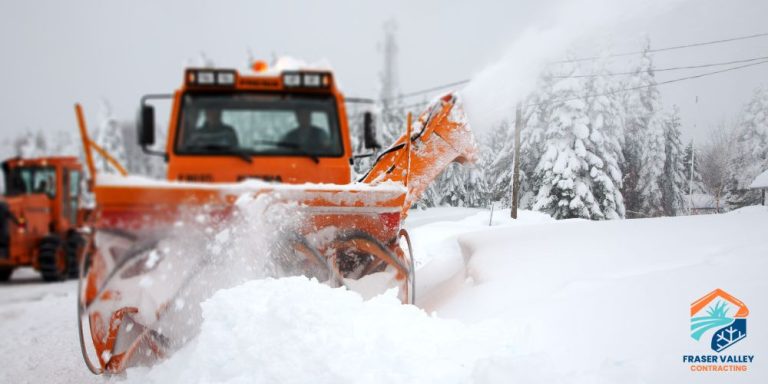
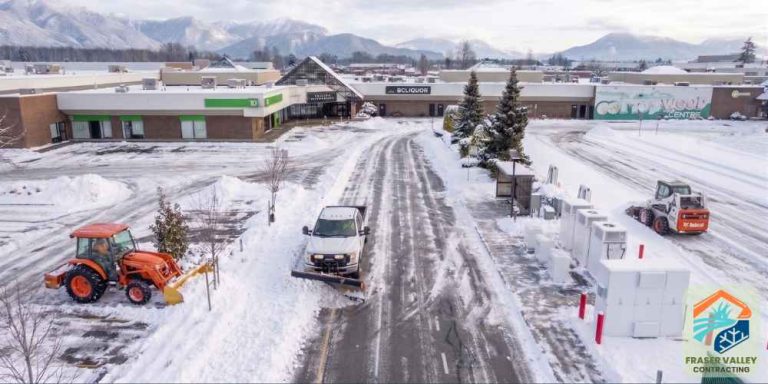
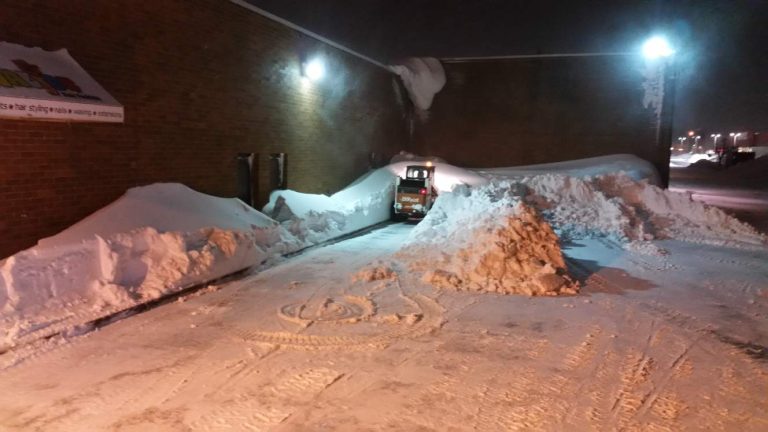
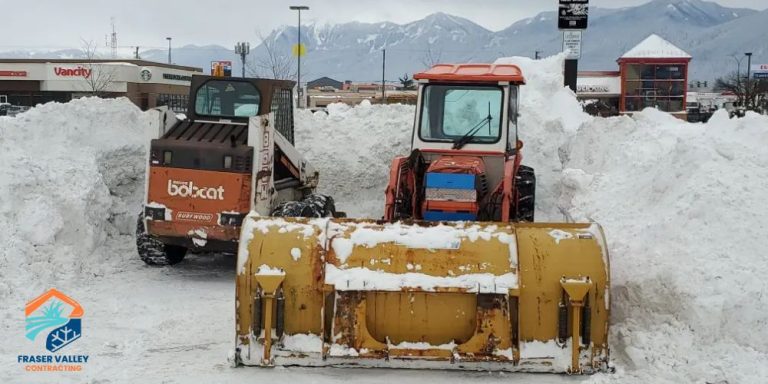
At Fraser Valley Contracting, we provide commercial and residential snow removal and de-icing services throughout Chilliwack, Agassiz, Abbotsford, Hope, and surrounding Fraser Valley communities. Our winter services include salt, brine, sand, and calcium application, along with snow clearing, roadway and sidewalk de-icing, and snow pile relocation.
The right ice-control approach depends on the conditions at the property. There is no single material that is ideal for every situation, which is why understanding how different applications work can help property owners and managers make better decisions about winter maintenance.
Why Winter Ice Control Matters
Snow is often easy to notice. Ice can be much harder to see.
A layer of ice can develop after freezing rain, overnight temperature drops, melting snow, or a thaw and refreeze cycle. Parking lots, sidewalks, entrances, loading areas, drive lanes, and other high-traffic surfaces can become difficult to navigate even when there is little or no visible snow.
For a commercial property, this can create problems for employees, customers, tenants, deliveries, and visitors. Keeping those areas accessible requires more than waiting for a storm to pass and reacting after ice has already formed.
Our approach to ice mitigation is based on monitoring weather conditions and responding when conditions indicate a risk of icing. Our winter service plans can be triggered by factors such as snow, freezing rain, frost, and temperatures approaching 0°C. We use weather forecasts, real-time information, and observations from the property to determine when treatment may be required.
This proactive approach is important because waiting until a surface has already become icy can reduce the effectiveness of an ice-control strategy.
Salt Application for Winter Ice Control
Rock salt has been used for winter ice management for many years and remains one of the materials used for de-icing applications. It can help melt ice and snow, but it also has limitations that property owners should understand.
One of the biggest considerations is temperature. The information we use for our winter services indicates that traditional rock salt has a practical temperature limitation and may become less effective as conditions get colder. Ground temperatures can also be colder than the surrounding air, which means that simply looking at the air temperature does not always tell the full story.
Salt can also take time to activate. When conditions are changing quickly, that delay can matter. There are also concerns around corrosion and the potential effects of salt on concrete, asphalt, equipment, landscaping, and surrounding areas when it is over-applied or carried into areas where it is not needed.
That does not mean salt has no place in winter maintenance. It means application needs to be considered in relation to the weather, surface conditions, property requirements, and the overall ice-control plan.
Our contract-based services allow salt or other approved materials to be applied to designated areas when conditions warrant treatment rather than relying on a one-size-fits-all approach.
Brine Application and Proactive Ice Control
Brine has become an increasingly important part of modern winter ice management.
Unlike rock salt, which is applied in a solid form, brine is a liquid solution. Its liquid form allows it to begin working immediately when applied to the surface and can help prevent ice from bonding to pavement.
At Fraser Valley Contracting, we make our own brine, which helps us maintain a more reliable supply during the winter season. The information we use for our service planning also identifies brine as an option that can perform in colder conditions than traditional rock salt.
Another important consideration is the amount of sodium chloride used. Our supplied material indicates that brine can use approximately 75% less sodium chloride than rock salt, which can reduce corrosion and the amount of salt introduced into the surrounding environment.
Brine can also remain bonded to asphalt better than rock salt, helping reduce the need for repeated applications in some conditions.
The biggest advantage, however, can be the ability to use brine proactively.
Rather than waiting for ice to become firmly established, brine can be applied based on forecasted weather conditions and observed site conditions. This is particularly useful when a freezing event is expected and the goal is to reduce the opportunity for ice to bond to the pavement in the first place.
Sand and Traction During Winter Conditions
De-icing and traction are not always the same thing.
Some winter conditions require a material that helps provide additional traction on a slippery surface. Sand is one of the materials that may be used as part of an ice-mitigation strategy.
Our winter service plans include the application of sand, along with materials such as salt, brine, and ice melt, depending on the conditions and requirements of the property.
For property owners and managers, the important consideration is that winter maintenance should address the actual hazard present at the site. In some circumstances, melting ice is the priority. In others, improving surface traction may be an important part of managing winter conditions.
That is why winter ice control should be treated as an ongoing property-management process rather than simply putting down the same material after every storm.
Calcium Application as Part of a Winter Strategy
Calcium is also included among the ice-control application services we provide.
Different properties can experience very different winter conditions, and material selection needs to take those circumstances into account. Rather than assuming that one product is appropriate for every situation, our winter services are designed around the conditions present at the property and the areas that need treatment.
Because winter weather can change quickly in the Fraser Valley, having multiple treatment options available gives property managers greater flexibility when developing an ice-control plan.
Calcium application can therefore be considered alongside salt, brine, and sand as part of a broader winter maintenance strategy.
Why Timing Is Just as Important as the Material
Choosing an ice-control material is only part of the equation. Timing matters too.
A property may require treatment before a weather event, during changing conditions, or after snow removal when melting and refreezing can create new hazards.
Our winter service agreements are designed around this reality. We monitor weather conditions and use information from multiple sources, including Environment Canada and AccuWeather, along with on-site observations. Applications can be triggered when conditions indicate a risk of icing, including temperatures approaching freezing, snow, freezing rain, or other weather patterns that can create slippery surfaces.
This means our crews do not simply wait for a property manager to call after a surface has become hazardous.
For seasonal clients, services can be performed proactively according to the agreed service plan. Depending on the severity and duration of a winter event, more than one visit may also be required within a 24-hour period.
What Happens When Snow and Ice Occur Together
Snow removal and ice mitigation often need to work together.
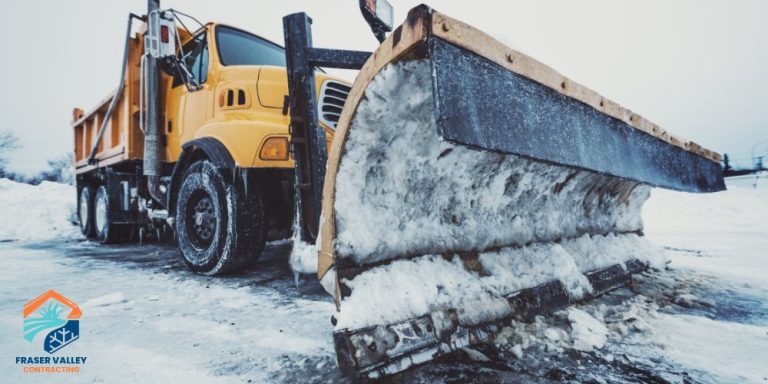
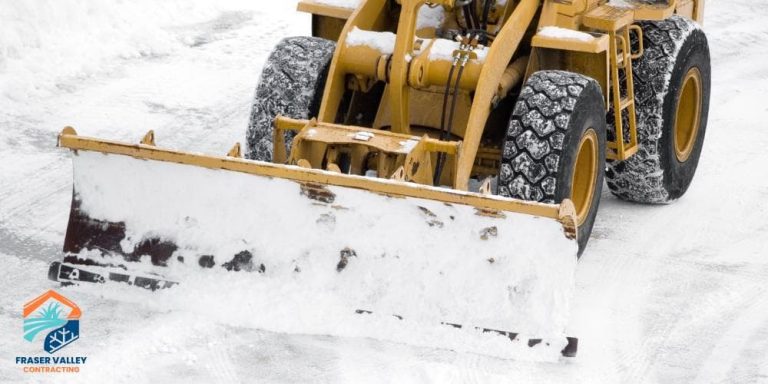
When snow accumulation becomes too significant for de-icing alone to be effective, snow clearing becomes necessary. Our snow management process can include pre-treatment before plowing to help reduce bonding and make snow removal easier.
Once snow has been cleared, de-icing material can be reapplied to help reduce the risk of refreezing.
This is especially important on commercial properties where traffic continues throughout a storm. Parking lots, drive lanes, sidewalks, entrances, loading areas, and other high-use surfaces may need to be addressed more than once as conditions change.
A property can be cleared in the morning and still develop icy areas later in the day if temperatures change or snow begins melting and refreezing. Winter maintenance therefore needs to account for what happens after the initial service as well.
Choosing the Right Winter Treatment for Your Property
There is no universal winter treatment plan for every property in the Fraser Valley.
A large commercial parking lot may have different requirements than a residential complex. An industrial property with heavy truck traffic may have different priorities from a retail property with a high volume of pedestrians. Sidewalks and building entrances can also require different attention than open parking areas.
When developing an ice-control plan, we consider factors such as the areas requiring treatment, expected weather conditions, traffic levels, surface conditions, and whether the property needs proactive or reactive service.
The materials available can include:
- Salt for traditional de-icing applications
- Brine for proactive treatment and ice prevention
- Sand where additional traction is required
- Calcium as another available ice-control application
The goal is not simply to apply the most material possible. It is to apply the appropriate treatment to the areas that need it based on the conditions.
Proactive Winter Maintenance Can Make a Difference
One of the most common challenges with winter maintenance is reacting too late.
Once ice has formed and bonded to a surface, removing it can be more difficult than preventing that bond from forming in the first place. This is why pre-treatment and weather monitoring are important components of our winter service approach.
At Fraser Valley Contracting, we use a combination of weather data, forecasts, and on-site observations to determine when winter treatment may be required. Our crews can respond to changing conditions and provide applications as part of per-visit or seasonal service plans.
For seasonal clients, this also means property managers do not have to monitor every weather event themselves and decide when to call for service. The service plan provides a structured approach to monitoring and treatment throughout the winter season.
Winter Ice Control for Fraser Valley Properties
Winter weather in Chilliwack and throughout the Fraser Valley does not always follow a predictable pattern. Temperatures can move around freezing, precipitation can change quickly, and conditions can vary from one property to another.
That makes preparation important.
Salt, brine, sand, and calcium each have a place within winter ice management, but the right application depends on the conditions and the property. Effective winter maintenance also requires attention to timing, monitoring, snow removal, refreezing, and areas with heavy pedestrian or vehicle traffic.
Fraser Valley Contracting provides snow removal and de-icing services for residential, commercial, and industrial properties throughout Chilliwack, Agassiz, Abbotsford, Hope, and surrounding Fraser Valley communities. Our services include snow clearing, roadway and sidewalk de-icing, salt, brine, sand, and calcium application, as well as snow pile relocation.
With a proactive winter service plan, property owners and managers can have a clear process in place before the next freezing event arrives.
If your property needs a winter ice-control plan, contact Fraser Valley Contracting to discuss your site, the areas that require treatment, and the service options available for the season.