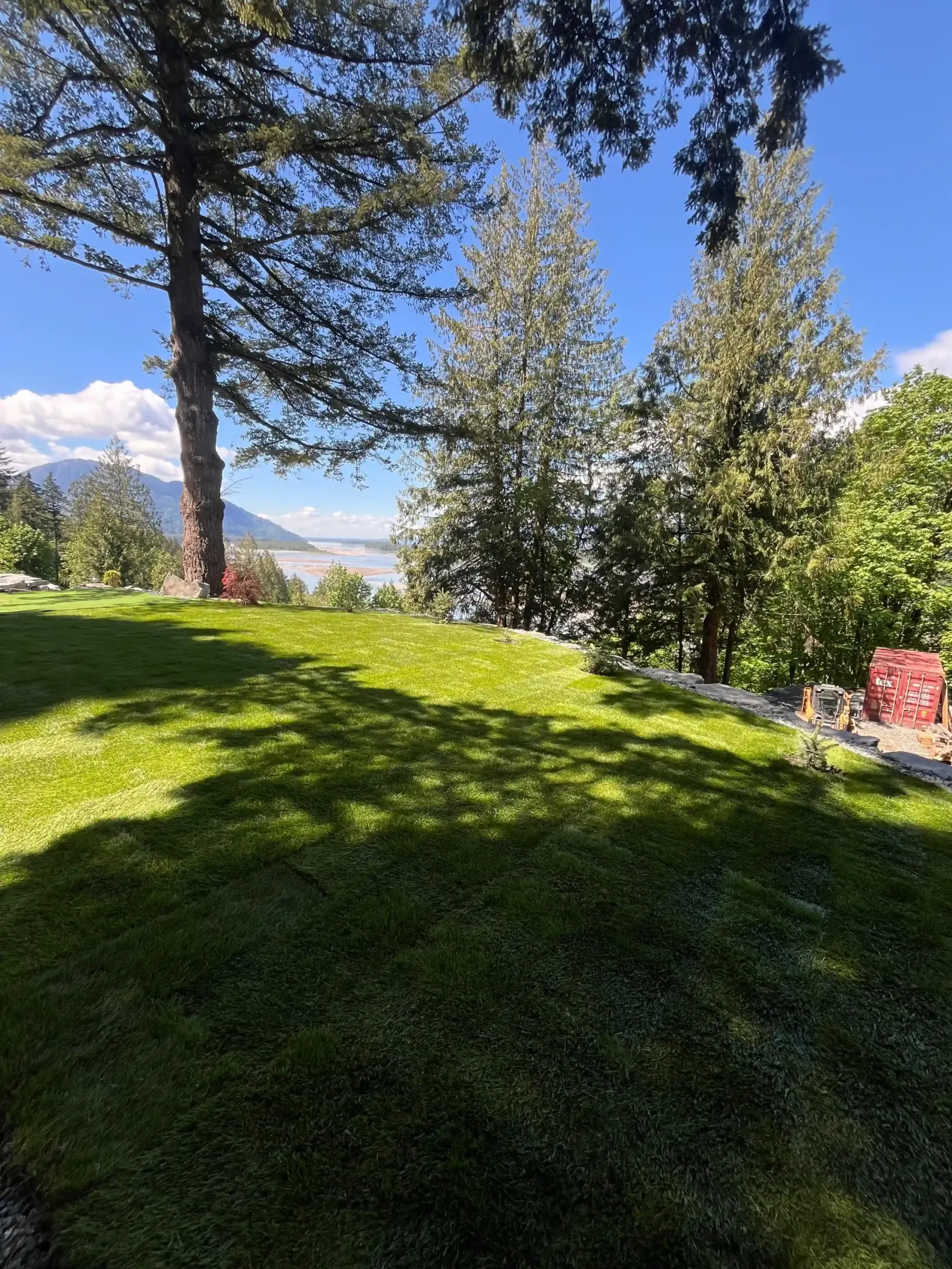
Water sitting on the lawn
Puddles that last for days after rain. The ground has no fall, and the soil underneath is slow to take water in.
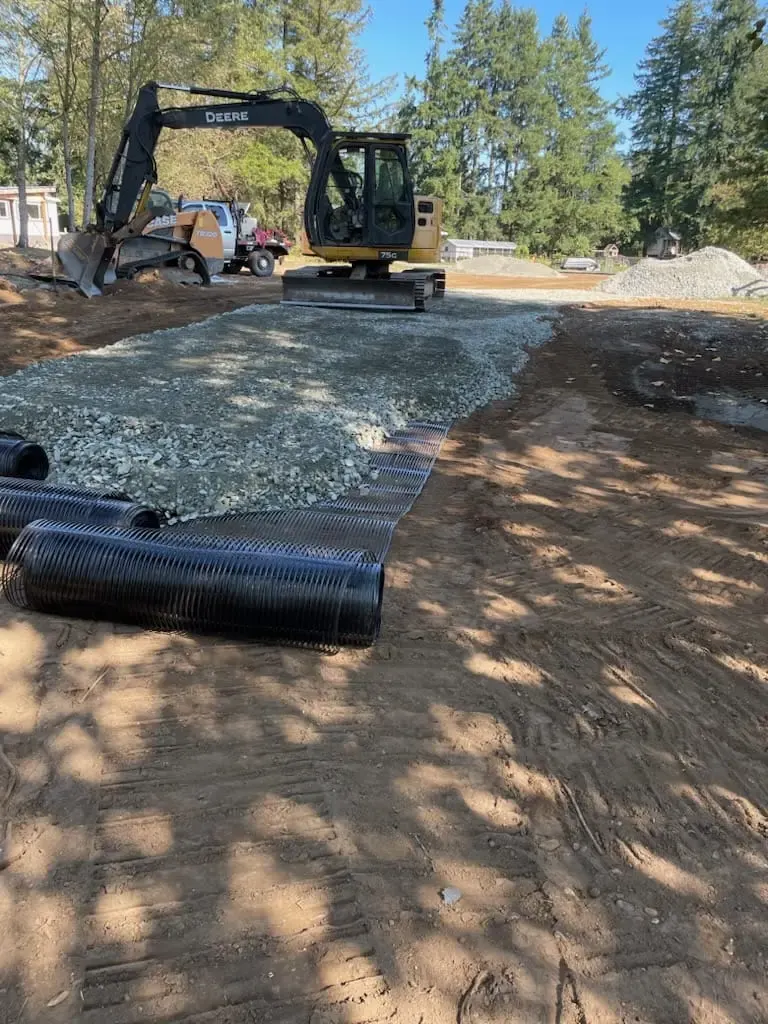
Water sitting on the lawn, running toward the house or turning the yard to mud every winter? We find where it comes from and give it somewhere to go.
Every one of these comes down to the same thing. The water has no downhill path to somewhere it can leave.
Puddles that last for days after rain. The ground has no fall, and the soil underneath is slow to take water in.
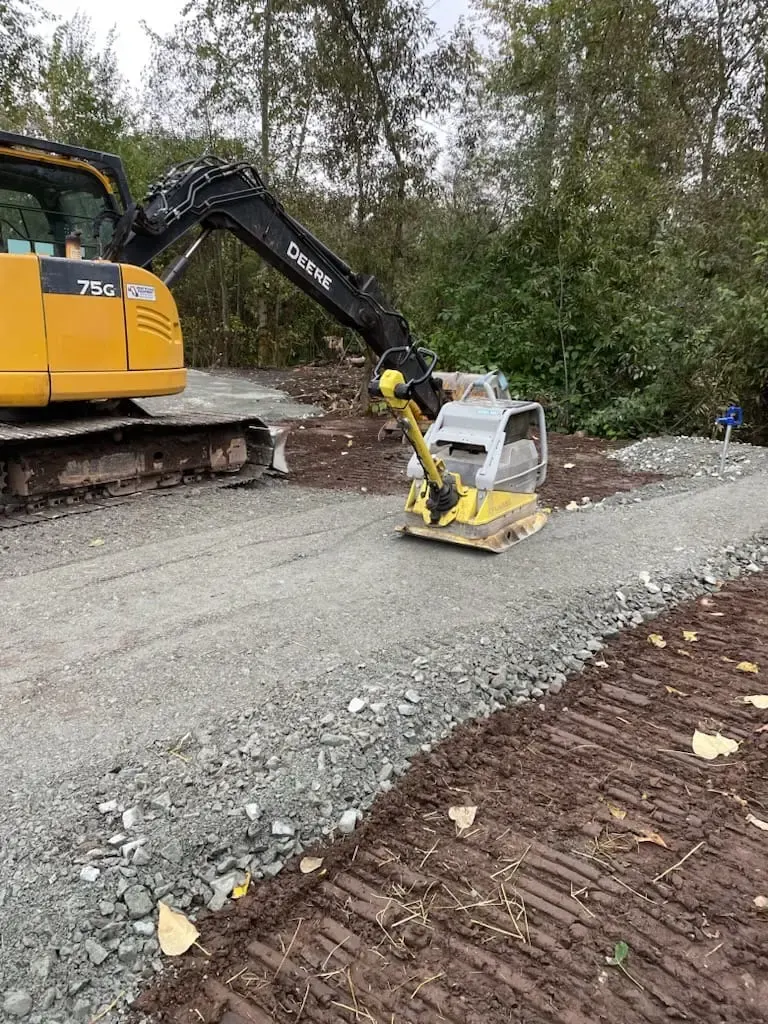
The yard falls the wrong way, so rain ends up against the foundation instead of moving away from it.
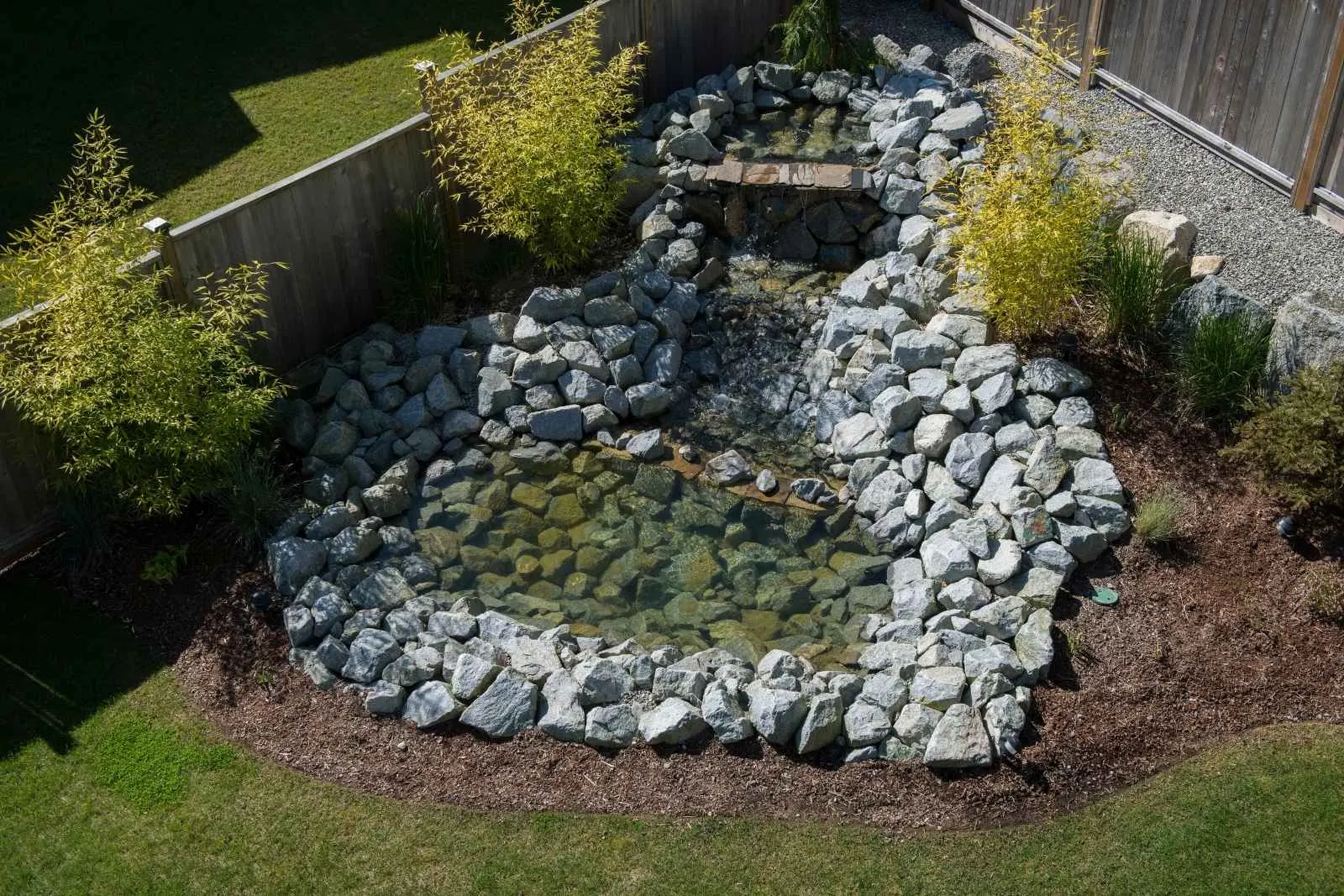
Water from higher ground collects at the bottom. Moss takes over and the grass gives up.
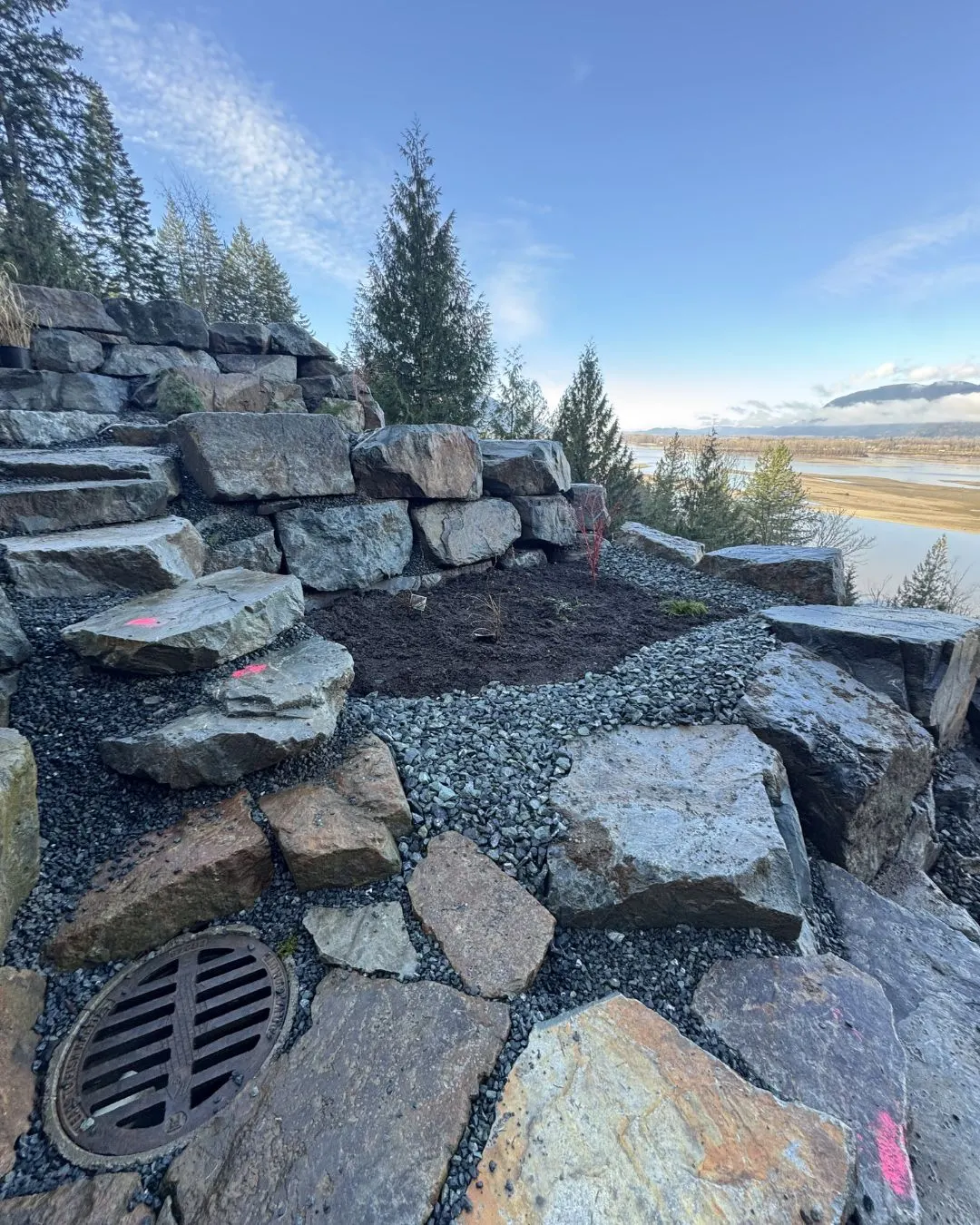
Seepage, staining or soft ground at the base of a retaining wall. Trapped water is what makes walls lean.
Learn more →Most wet yards are a fall problem, not a soil problem. Adding topsoil just raises the puddle. Digging a pit in clay just makes a buried one.
We find where the water comes from, give it a downhill path, and run it to an outlet lower than the yard. Sometimes that is regrading alone. Sometimes it is a french drain. We will tell you which one your yard needs.
Dug right. Drained right.
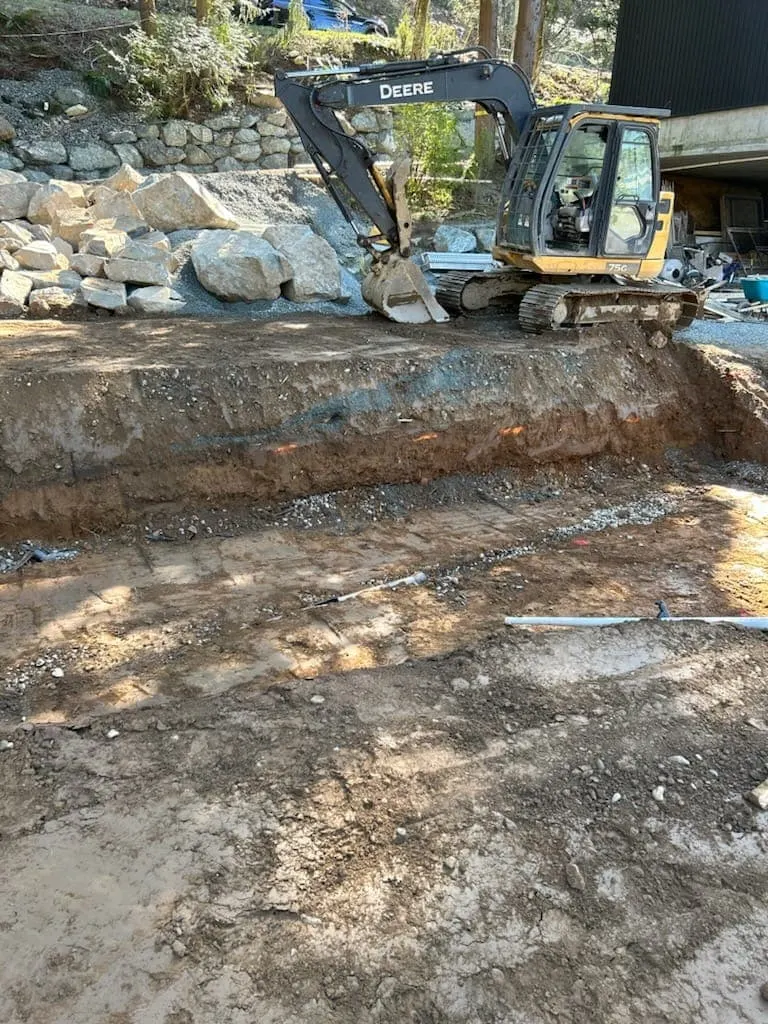
Three steps from the first call to a dry yard.
Tell us where the water sits and when it shows up, and we will set up a time to come out.
We walk the yard, find the source and the outlet, then you get a quote with the full scope.
One crew takes the job from the first dig to the final grade, topsoil and cleanup.
Yard drainage moves surface and subsurface water off a property along a planned path. Every working system has three parts: a source that gets identified, a path with enough fall, and an outlet lower than the yard. Standing water in a yard is a fall and drainage problem rather than a soil problem. Clay subsoil and machine-compacted fill slow absorption, a flat or dished grade leaves water nowhere to run, and the fix moves water across the ground to somewhere it can leave.
Drainage starts with the source, because the source decides the method. Five sources account for almost every wet residential yard.
Each symptom reports where the water goes and how long it stays.
Watching the yard during heavy rain reveals the path faster than any other test. The water shows where it enters, where it runs and where it stops.
Ground type decides whether water soaks in or sits on top. Clay-heavy flats, such as the ground toward Sumas Prairie in Abbotsford, absorb water slowly and hold it at the surface. Builder fill compacted by machines during construction behaves the same way, which explains why many newer subdivision lots drain badly despite looking level.
Flat grading leaves water with no direction. A hollow at the bottom of a slope collects everything above it. Agricultural ground with a high water table has little room below the surface to accept more water. On all of these, water has to be moved across the ground to an outlet rather than pushed into it.
The outlet decides whether a drainage system works at all. Collected water needs a destination lower than the point of collection.
A pipe run out to daylight on a lower part of the property forms the most common outlet on sloped lots. A roadside ditch serves many rural properties. A municipal storm connection serves some urban lots where the local authority permits it. A rock-filled soakaway stores water underground and works only where the subsoil drains. A natural drainage path already on the property serves where it exists. Flat clay lots with no lower point present the hardest outlet problem, and the outlet often sets the length and cost of the job.
Soil type sets how fast water soaks in, and fall decides whether it leaves. Giving water a downhill path to an outlet removes it from any soil. Replacing soil without creating fall leaves the water where it was.
Pipe and rock collect water. Only an outlet removes it. A trench with no exit fills during the first heavy rain and holds the water underground, out of sight and still saturating the yard.
Redirecting a downspout or intercepting a slope at the top costs less than collecting the combined flow at the lowest point. Source control reduces the size of everything downstream.
Surface water follows the grade. Reshaping the yard so the ground falls away from the house and toward an outlet removes standing water with machine work and topsoil rather than a buried system.
Clay absorbs water slowly regardless of depth. Drainage on clay works by conveying water along the surface or through a shallow collection trench to an outlet, rather than by soaking it away.
Misconception: A French Drain Fixes Every Wet Yard.
A french drain collects water and moves it. Without fall and an outlet the trench fills and stays full. On many yards regrading the surface solves the problem with no pipe at all.
Misconception: Adding Topsoil Fixes Standing Water.
Topsoil over a low spot raises the puddle rather than removing it. The water still meets the same subsoil and the same lack of fall underneath. Fall and an outlet remove water; topsoil hides it for a season.
Misconception: Water Soaks Away If The Drain Is Deep Enough.
Clay and compacted fill absorb water slowly at any depth. A deep pit in clay fills and holds water like a buried bucket. Moving water across the ground to an outlet works where soaking it in fails.
Misconception: Drainage Is Only A Problem In Winter.
Winter rain reveals the problem and summer hides it. The same low spot that ponds in November stays soft under the surface, kills turf and pushes on nearby walls and foundations year round.
Misconception: Drainage Work Ruins The Lawn For Good.
Trenches and regrading disturb the yard for the length of the job. Backfill, topsoil and new sod or seed restore the surface, and a drained lawn grows better than the wet one it replaced.
Filter fabric. One side wraps french drain pipe or trenches in fabric to keep silt out. The other cites fabric clogging in fine soils and relies on clean rock instead.
Regrading or pipe first. One position starts with regrading on cost grounds. The other cites the limits on reshaping a lot bounded by a house, a patio and property lines.
Dry creek beds. One side treats them as functional drainage. The other treats them as decoration unless graded to an outlet.
Soakaways on clay. One view treats a rock pit as useful storage. The other treats it as a buried puddle in ground that never drains it.
Downspouts. One side discharges onto the lawn for simplicity. The other pipes roof water away to keep concentrated flow off the foundation.
Yard drainage works by identifying the water source, giving the water fall and delivering it to an outlet lower than the yard. Regrading, french drains, swales, dry creek beds and wall drainage each suit different sites, and clay or compacted ground favours moving water across the surface over soaking it away. Standing water in a yard is a fall and drainage problem rather than a soil problem, and a drain without an outlet only moves the puddle.
When heavy rain hits the Fraser Valley, poor drainage can quickly turn your yard into a muddy, waterlogged mess. Standing water doesn’t just look bad, it can damage your...
Read the guide →
Good landscaping design isn’t just about how a yard looks on day one, it’s about how it performs year after year in Chilliwack’s real-world conditions. From heavy...
Read the guide →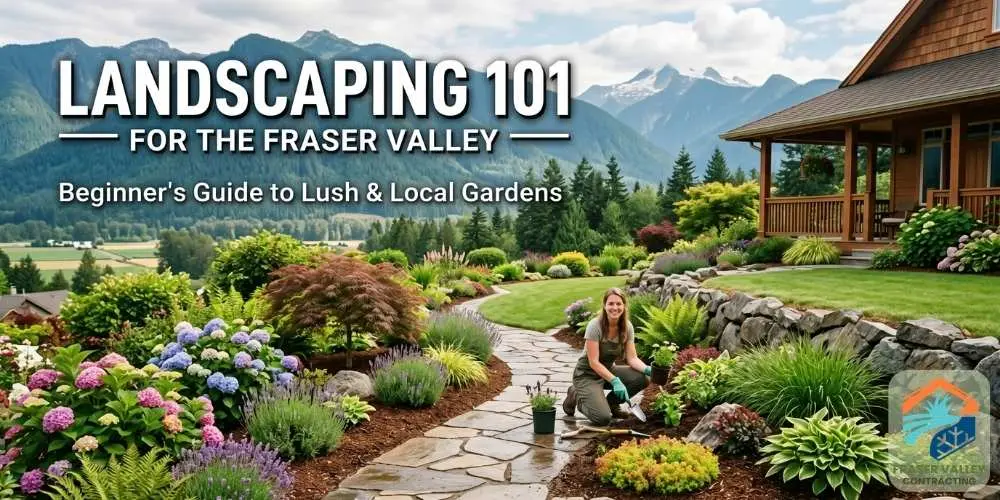
Landscaping 101 The Fraser Valley landscaping guide that starts below the surface Everything a Chilliwack or Fraser Valley homeowner should know before reshaping a yard...
Read the guide →We have hired this crew for various projects on our acreage. The latest project was an equestrian riding arena, which turned out excellent. They are always willing to take on tasks and challenges with great outcome. Their operators and labourers are hard-working and willing to put in the time to get a job done.
Great company 5/5. Owen and team are honest and hard working.
We always use them for our jobs. Easy to work with and very reliable.
Usually, yes. Standing water is almost always a fall and drainage problem rather than a soil problem. We grade for fall, add drainage where it is needed, and give the water somewhere to go.
A trench filled with clear drain rock around a perforated pipe. Water soaks into the rock, collects in the pipe and runs along it to an outlet lower than the yard.
It depends on the yard. If the ground can be reshaped so water runs away from the house, regrading alone often does it. If a house, patio or property line stops the grade from changing, a french drain carries the water instead. We will tell you which one you need.
Somewhere lower than your yard, such as a point further down the slope, a ditch or another outlet that suits the property. Finding that outlet is part of the site visit.
The yard gets dug up while we work. Grading, topsoil and cleanup are part of the scope, not an extra, and a drained lawn grows better than a wet one.
Based in Chilliwack, working with homeowners and businesses from Langley through to Hope.
Not sure if we cover your area? Call (604) 703-8315 and we will tell you right away.
Give us a call or fill out the form. We will visit your property within the week, take a look and give you a free estimate.