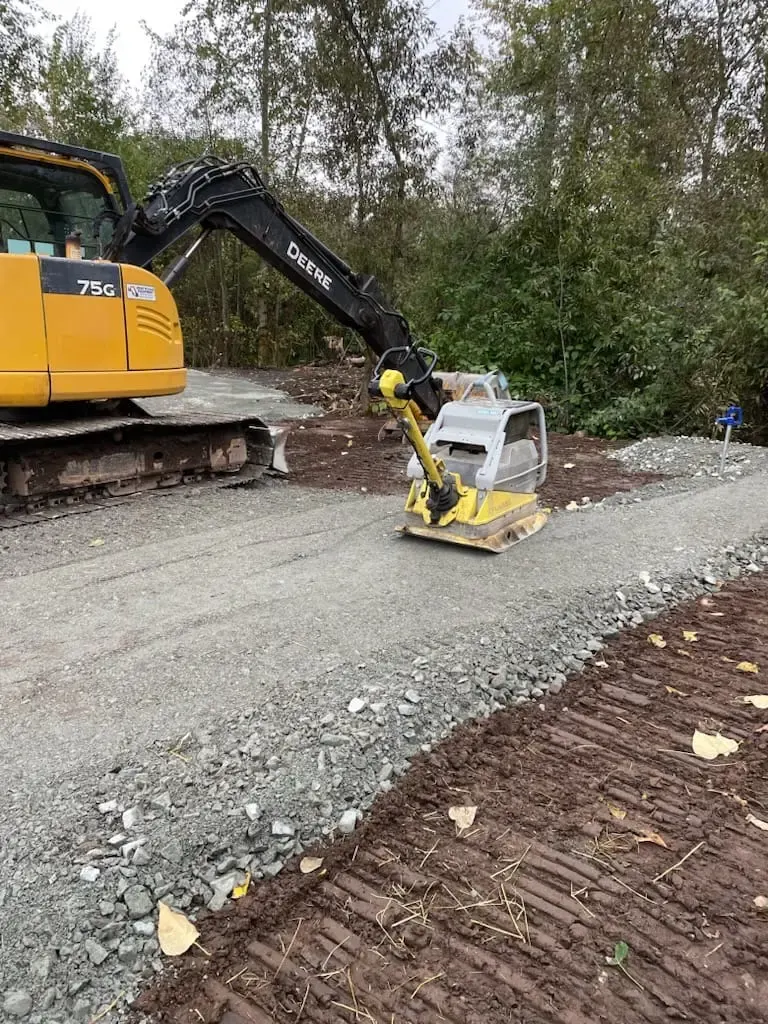
Site levelling and grading
Turning uneven or sloped ground into flat, usable space before anything gets built on it.
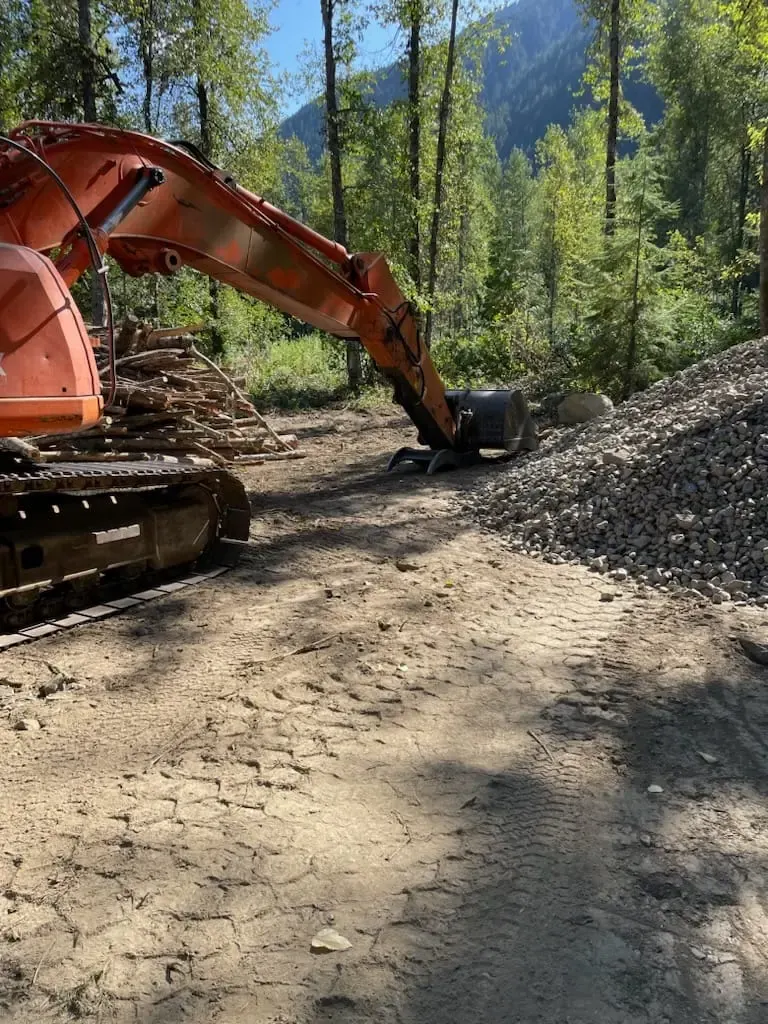
Digging, levelling, drainage and septic, including tight back yards a full size machine cannot reach.
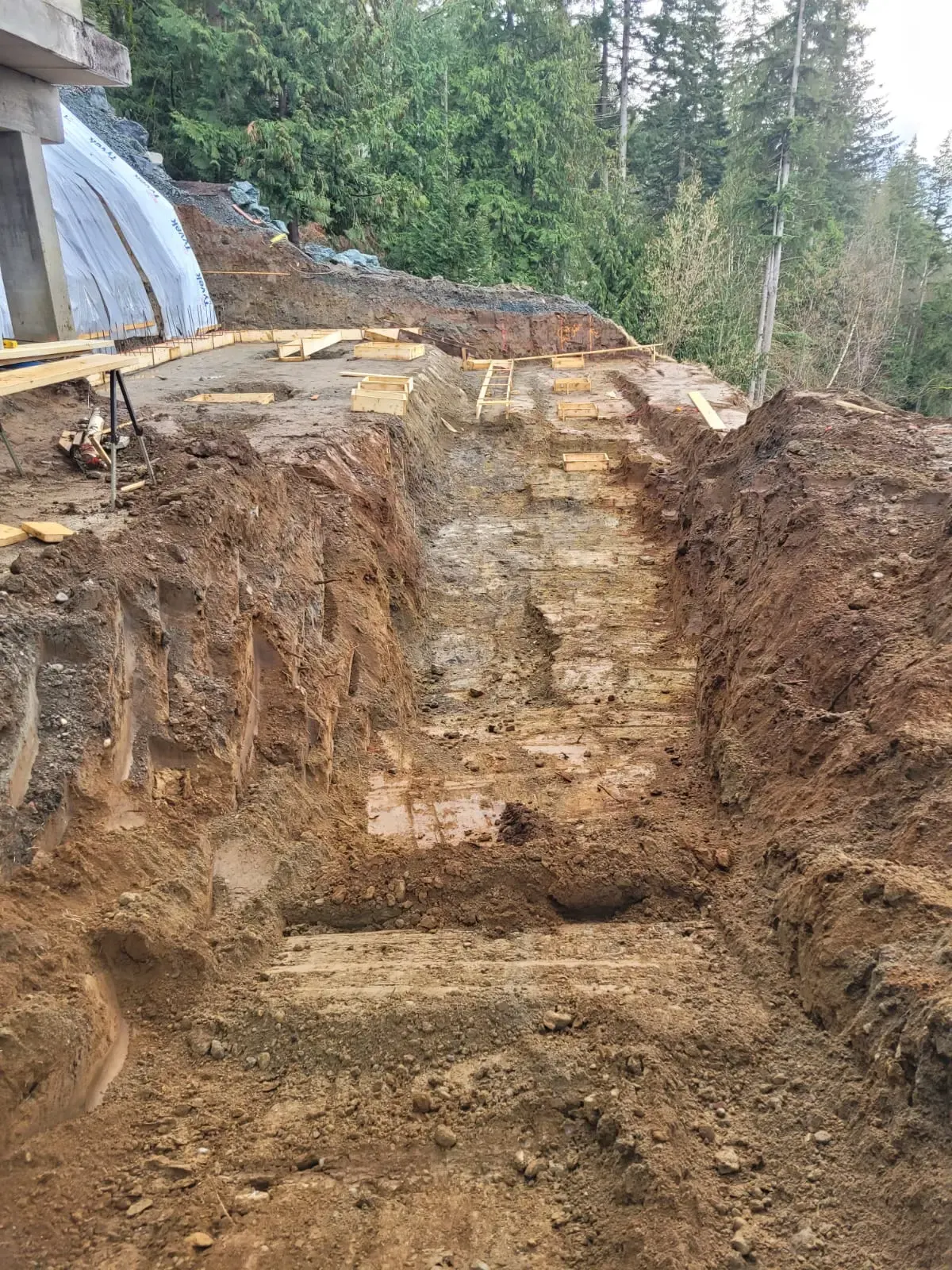
The dig is the part nobody sees once the job is done, and the part that decides whether the rest of it lasts.
Turning uneven or sloped ground into flat, usable space before anything gets built on it.
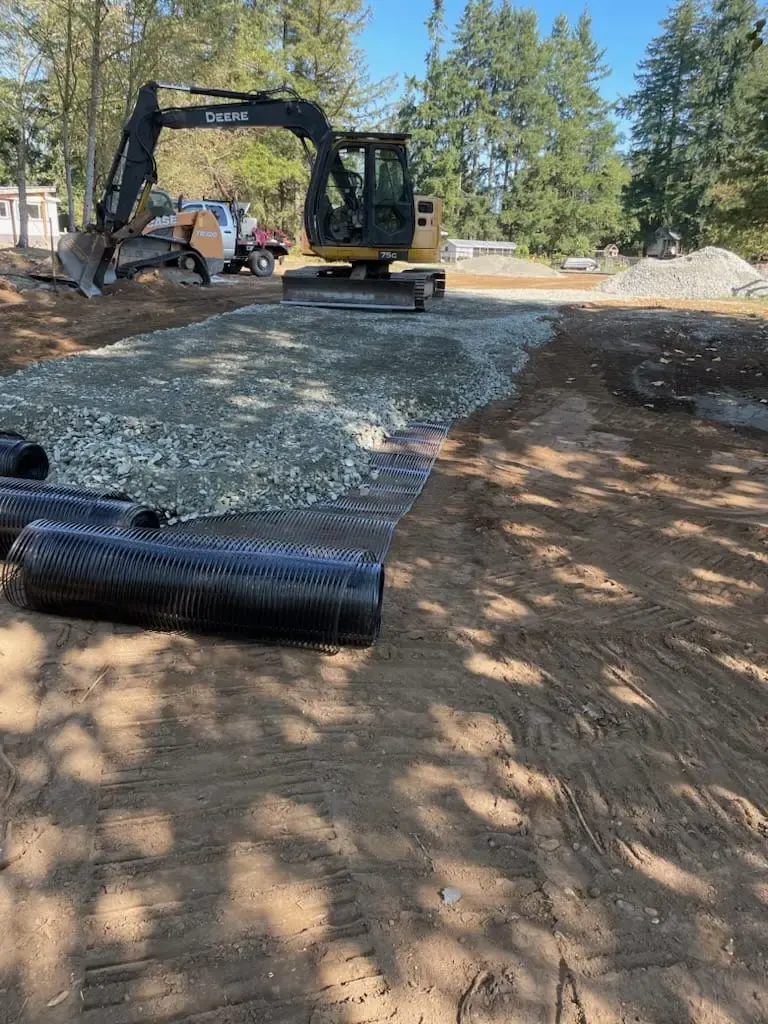
French drains, swales and proper fall, so water leaves the property instead of sitting in the yard.
Learn more →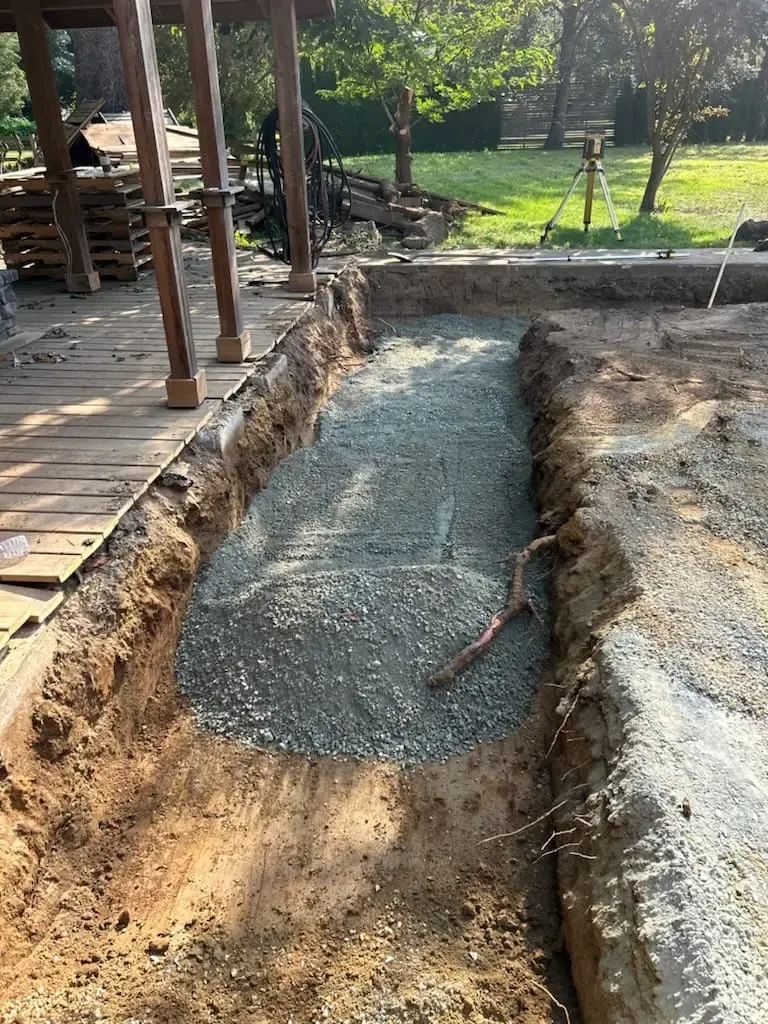
Installation, replacement and repair, including the excavation and the restoration afterwards.
Learn more →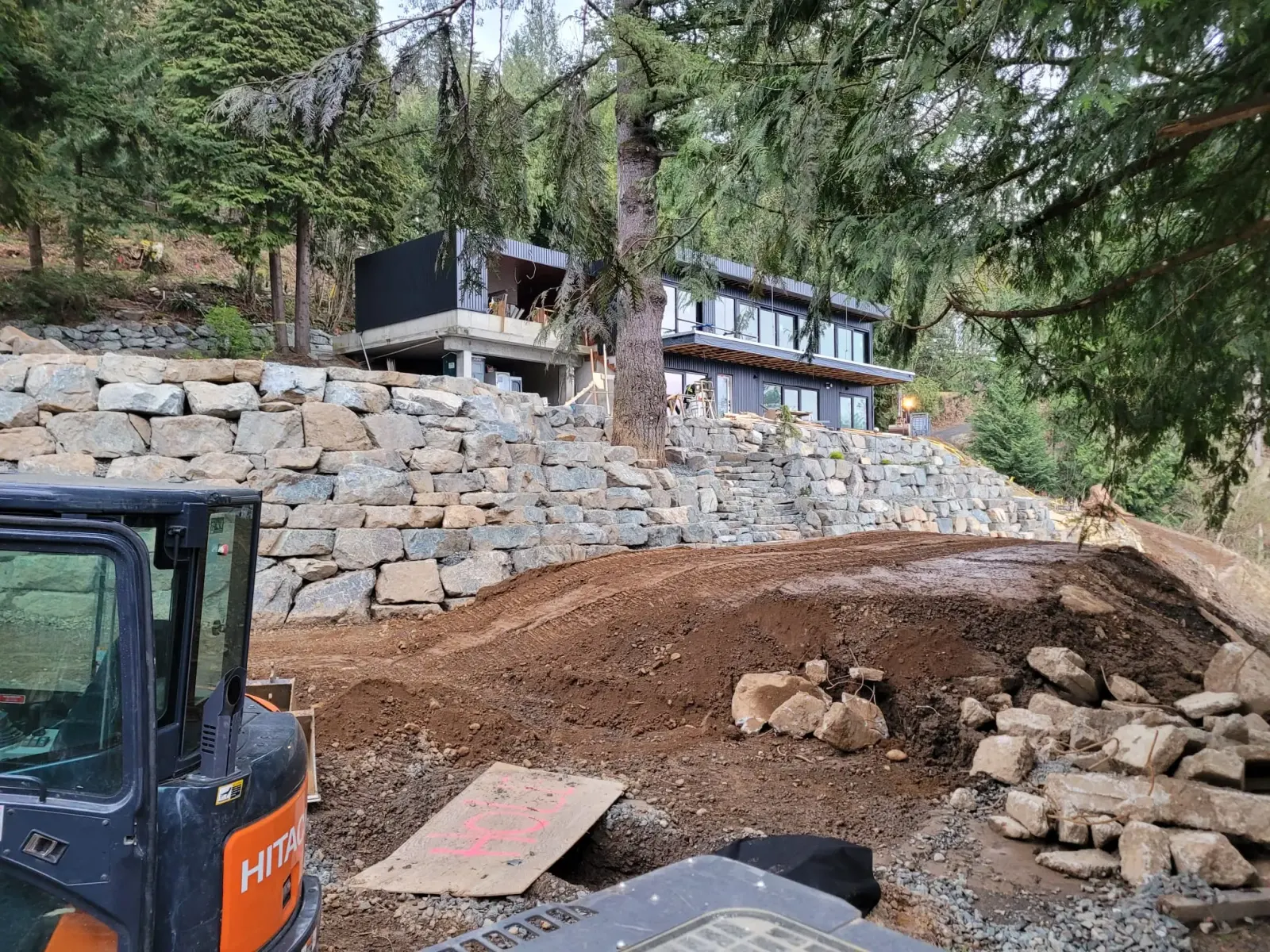
The dig behind a retaining wall, and the base prep that decides whether it stays straight.
Learn more →Base prep, fall and drainage are invisible once a job is finished, and they are the reason a patio stays flat or a wall stays straight.
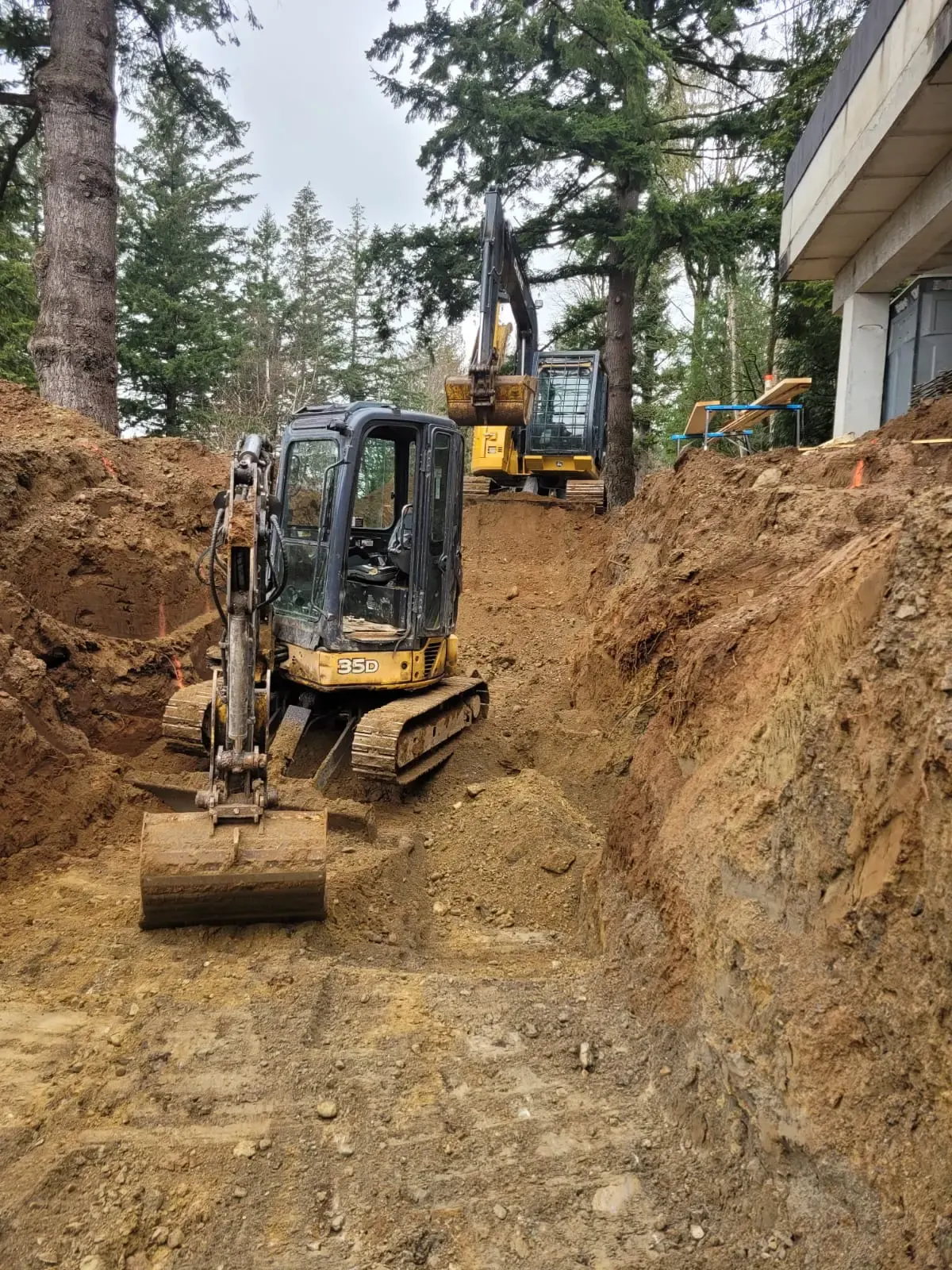
Tight access is common on Fraser Valley lots. Mini excavators fit through a garden gate and full size machines handle the bigger earthworks, so access never decides whether the job gets done properly.
Dug right. Drained right.
Three steps from the first call to finished ground.
Tell us about the yard and anywhere water sits in it, and we will set up a time to come out.
We walk the site, then you get a quote with the full scope.
One crew takes the job from the first dig to the final grade and cleanup.
Excavation shapes ground so water moves to a chosen point rather than collecting where it lands. Grading establishes surface fall. Trenching and pipe handle the volume that fall alone cannot move. Compaction in controlled lifts gives the resulting ground the bearing capacity that anything built on top depends on. Three measurements govern the outcome: the gradient of the finished surface, the elevation of the discharge outlet, and the density achieved in the fill. Machine selection follows site access rather than job size.
Machine selection follows the narrowest constraint on the site rather than the volume of work.
Operating weight, boom reach, track width and ground pressure separate the classes. A large machine that cannot reach the work, or that requires fence removal and reinstatement, delivers slower overall progress than a small machine working continuously.
Grading produces a controlled slope. Levelling produces a flat plane. The distinction matters because a flat surface holds water and a graded one moves it.
Surface drainage commonly targets around two percent, roughly 20 millimetres of drop per metre, directed away from structures. Hard surfaces tolerate less gradient because they shed water efficiently. Lawns and planted areas tolerate more. Fall below one percent produces ponding once minor settlement occurs, which it always does.
Cut and fill balances the work. Material cut from the high side fills the low side, which reduces both import and haulage. A balanced site moves less material in total and costs less as a result.
The discharge point governs everything upstream. A catch basin, a swale or a trench moves water only as far as its outlet. Establishing where water leaves the property precedes deciding how it gets there.
A french drain intercepts subsurface water and carries it to a discharge point. Perforated pipe sits in clear crushed stone, wrapped or separated by non-woven geotextile, in a trench commonly between 450 and 900 millimetres deep.
Trench depth follows the invert elevation required to reach the outlet rather than a standard dimension. A drain installed deeper than its discharge point cannot flow.
Geotextile separates the stone from surrounding soil. Without it, fines migrate into the aggregate and the system silts up progressively while appearing intact at the surface.
Daylighting the outlet completes the path. A collector terminating in buried fill relocates water a short distance and returns it to the same ground. The discharge has to reach a ditch, a storm connection, or a point low enough on the property that the water leaves.
Pipe diameter divides practitioners. Larger diameter offers capacity. Smaller diameter maintains velocity that resists siltation. Both positions address the same failure mode from opposite directions.
Compaction in lifts produces uniform density. Material placed in 150 to 200 millimetre layers and compacted individually reaches target density throughout. Fill dumped in a single mass retains voids that close over following seasons, and the surface above settles differentially.
Differential settlement produces the dips in a driveway, the cracked patio joint and the low spot that ponds. Those outcomes appear one to three years after the work rather than immediately, which disconnects the symptom from its cause.
Subgrade preparation precedes any fill. Topsoil and organic material come out entirely, because both compress and decompose under load. Proof rolling confirms the exposed subgrade carries the intended bearing.
Moisture content governs achievable density. Soil too wet or too dry resists compaction regardless of effort applied. Fraser Valley clay through winter sits well above optimum moisture, which is one reason earthworks sequencing follows the season.
Fall set during earthworks determines drainage behaviour for the life of everything built on top. Correcting gradient after a patio, driveway or lawn is in place means removing that surface first.
Layered placement allows compaction effort to reach the full depth of each lift. A single thick placement compacts at the surface and retains voids below, which close under load across following seasons.
Gate width, overhead clearance and turning radius constrain the choice before volume does. Having both mini and full size machines available changes what a quote covers, because access no longer dictates method.
Excavation introduces voids between particles and bulks material by roughly 20 to 30 percent. Compaction recovers part of the increase. The remainder leaves as spoil, which is why haulage appears as a line on earthworks pricing.
Collection and discharge are separate functions. Pipe gathers water. The outlet removes it. A system terminating in buried fill performs the first function and not the second, and the ground saturates at the new location instead.
Misconception: Drainage Problems Require A Drain.
Ponding frequently results from insufficient surface fall rather than from inadequate subsurface capacity. Regrading to establish fall resolves many cases without installing pipe. Assessment establishes whether water sits because it has nowhere to go or because nothing directs it.
Misconception: Compaction Happens Automatically Under The Weight Of Fill.
Self weight consolidates fill slowly and unevenly across seasons. Mechanical compaction in controlled lifts achieves target density immediately and uniformly. Surfaces built over uncompacted fill settle differentially, which produces the dips and cracking that appear in the first years.
Misconception: Excavated Soil Returns To The Same Volume.
Excavation introduces voids between particles and increases volume by roughly 20 to 30 percent. Compaction recovers part of that increase. The remainder leaves the site as spoil, which is why haulage appears on excavation quotes.
Misconception: A Flat Yard Drains Better Than A Sloped One.
A flat surface holds water. Drainage requires gradient. A controlled slope directs water to a chosen discharge point. Flat ground directs it nowhere, and minor settlement then creates low points that pond.
Misconception: Bigger Machines Always Finish Faster.
Machine productivity depends on access and working room. A full size excavator that cannot reach the work area, or that requires fence removal and reinstatement, produces slower overall progress than a mini excavator working continuously through a standard gate.
Regrading against subsurface drainage. Regrading advocates cite lower cost and no components to silt up. Drainage advocates cite performance on clay, where surface fall alone moves less water than the ground delivers.
Lift thickness. One convention specifies 150 millimetres regardless of equipment. The other accepts 300 millimetres where heavier compaction plant is in use. The disagreement is about whether compaction energy reaches the base of the lift.
Topsoil strip depth. One approach strips a fixed dimension across a site. The other follows observed organic content, which varies within a single lot and produces an uneven but accurate strip line.
Pipe diameter. Larger diameter offers capacity for peak flow. Smaller diameter maintains velocity that resists siltation. Both target the same long term failure mode.
Tracks against wheels on wet ground. Tracks reduce ground pressure and limit rutting on saturated Fraser Valley soil. Wheels offer faster site mobility. Winter conditions favour the first and summer conditions narrow the gap.
Excavation and grading determine where water goes and what the ground above will carry. Machine class follows site access. Surface fall establishes drainage before any finish is installed. Subsurface drains collect water, and a daylighted outlet removes it. Compaction in controlled lifts produces the uniform density that prevents the differential settlement responsible for dips, cracking and ponding. Each outcome traces to the same three measurements, which are gradient, outlet elevation and achieved density.
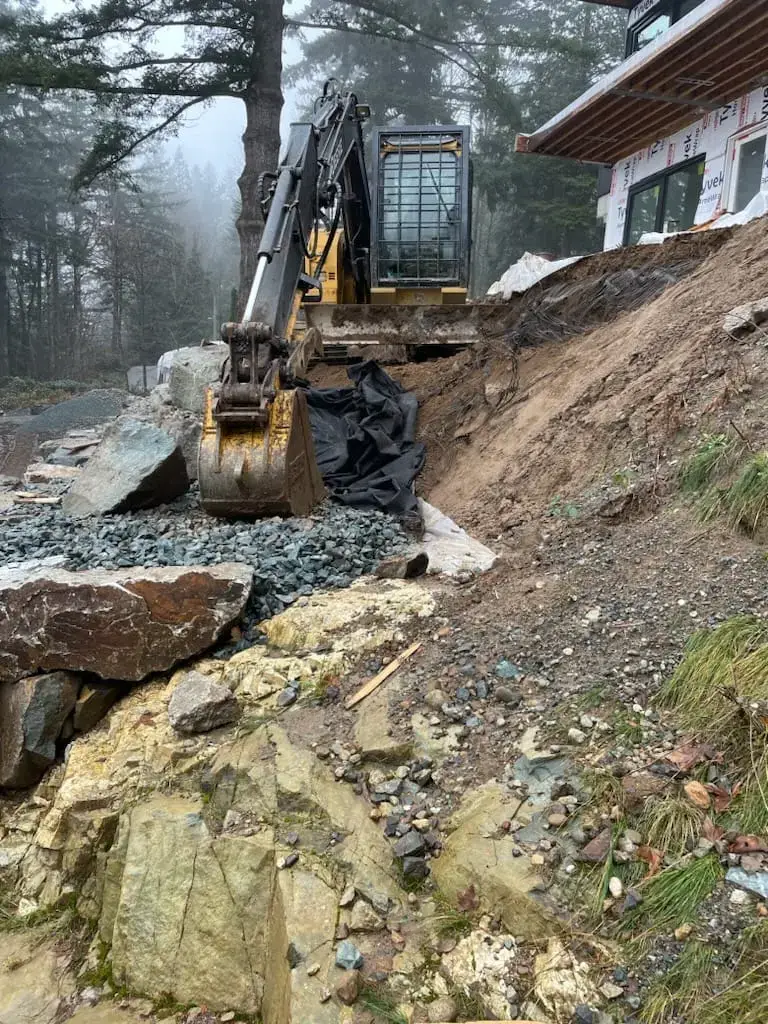
Excavation Services in Chilliwack: Building Strong Foundations with Fraser Valley Contracting Why Quality Excavation Is Critical to Any Construction Project Before any...
Read the guide →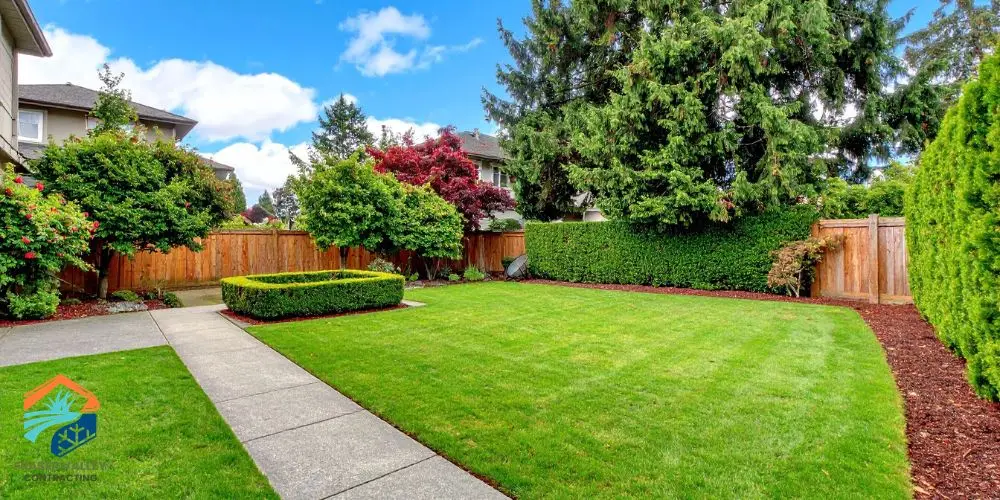
When heavy rain hits the Fraser Valley, poor drainage can quickly turn your yard into a muddy, waterlogged mess. Standing water doesn’t just look bad, it can damage your...
Read the guide →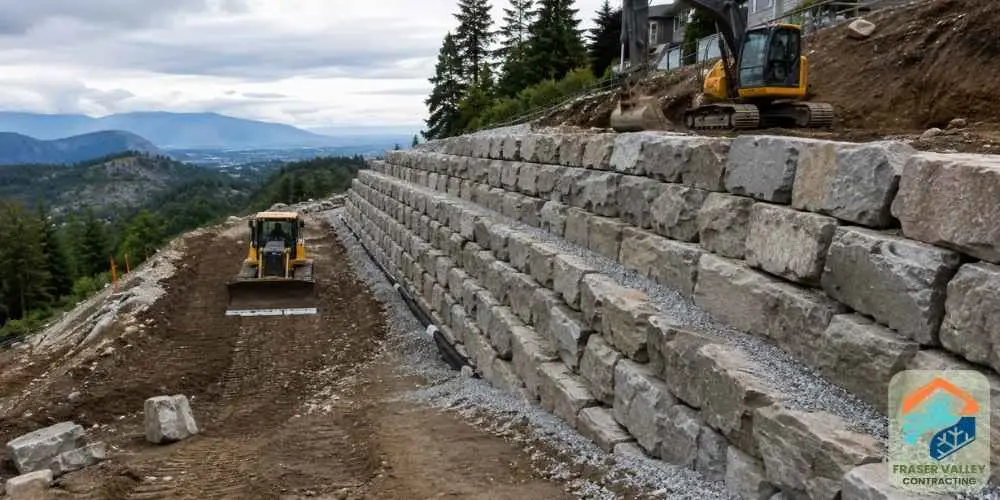
Whether you’re preparing land for a commercial development, creating more usable space on a sloped property, or protecting your investment from erosion, a large scale...
Read the guide →We have hired this crew for various projects on our acreage. The latest project was an equestrian riding arena, which turned out excellent. They are always willing to take on tasks and challenges with great outcome. Their operators and labourers are hard-working and willing to put in the time to get a job done.
Great company 5/5. Owen and team are honest and hard working.
We always use them for our jobs. Easy to work with and very reliable.
Mini excavators that fit through a standard gate, through to full size machines for bigger earthworks. Having both matters on tight lots, and it is one of the things we check before quoting access.
Usually, yes. Standing water is almost always a fall and drainage problem rather than a soil problem. We grade for fall, add drainage where it is needed, and give the water somewhere to go.
Yes. Getting material off site without wrecking the rest of the yard is part of the job and part of the quote.
Based in Chilliwack, working with homeowners and businesses from Langley through to Hope.
Not sure if we cover your area? Call (604) 703-8315 and we will tell you right away.
Give us a call or fill out the form. We will visit your property within the week, take a look and give you a free estimate.