Winter in the Fraser Valley can change quickly. A relatively mild morning can turn into freezing rain, frost, or an overnight freeze that leaves roads, parking areas, sidewalks, entrances, and other high-traffic surfaces dangerously slippery. For businesses, property managers, strata properties, industrial sites, and residential complexes, winter ice is more than an inconvenience. It can interfere with access, create slip hazards, and make it much harder to keep a property operating safely.
At Fraser Valley Contracting, we provide roadway and sidewalk deicing services throughout Chilliwack, Agassiz, Abbotsford, Hope, and surrounding Fraser Valley communities. Our approach is focused on keeping properties accessible and managing ice before it becomes a larger problem.
Effective deicing is not simply a matter of spreading salt after a surface has already frozen. Timing, weather conditions, surface temperatures, traffic patterns, material selection, and the specific areas being treated all play a role. A good winter ice management plan is proactive, consistent, and adapted to the property.
Why Roadway and Sidewalk Deicing Matters
When winter temperatures approach freezing, water on paved surfaces can quickly become ice. This can happen after rain, melting snow, frost, or a freeze-thaw cycle. Even when a property looks clear, shaded areas, entrances, ramps, walkways, and low-lying sections can remain slippery.
Roadways and parking areas present their own challenges because vehicles need adequate traction to enter, exit, turn, and stop safely. Sidewalks and pedestrian areas require a different level of attention because even a relatively small amount of ice can create a serious slip hazard.
For commercial properties, the consequences can extend beyond an individual slippery patch. An untreated walkway can affect employees arriving for work, customers entering a building, delivery drivers moving through the site, tenants accessing their units, or pedestrians travelling between parking areas and entrances.
That is why roadway and sidewalk deicing should be considered part of an overall winter property management strategy rather than something to think about only after ice has already formed.
Start With the Weather Instead of Waiting for the Ice
One of the biggest mistakes property owners can make is waiting until a surface is visibly icy before taking action. By that point, the ice may already be bonded to the pavement, and conditions may have become much more difficult to manage.
At Fraser Valley Contracting, we use weather forecasts, real-time information, and observations from the property to determine when ice mitigation may be required. Our winter service plans can be triggered by conditions such as snow, freezing rain, frost, or temperatures approaching 0°C.
This proactive approach is important because the weather does not always follow a predictable pattern. Temperatures can rise above freezing during the day and then fall again overnight. Snow can melt and refreeze. Rain can turn into freezing rain. A surface can also remain colder than the surrounding air, meaning conditions can become icy even when the temperature does not appear particularly severe.
The goal is to act before conditions become difficult to control.
Know the Difference Between Snow Removal and Deicing
Snow clearing and deicing are closely connected, but they are not the same service.
Snow removal focuses on physically removing accumulated snow from roads, parking areas, sidewalks, and other surfaces. Deicing focuses on managing ice and preventing or reducing the bonding of ice to pavement.
When snowfall becomes too substantial for deicing alone to be effective, snow clearing becomes necessary. Once snow has been removed, deicing can then be used to reduce the risk of refreezing and help manage remaining icy conditions.
This is why an effective winter program often combines snow removal with proactive ice control. Treating a property before a storm can make subsequent snow removal easier, while treating surfaces after plowing can help address the risk of ice developing again.
Choose the Right Deicing Material
Not every deicing material works the same way, and choosing the right product can make a significant difference in winter maintenance.
Fraser Valley Contracting provides salt, brine, sand, and calcium applications as part of our winter services. The appropriate material and application depend on the conditions and the area being treated.
Rock salt has traditionally been one of the most common options for winter ice management. However, it has limitations. Our winter service information notes that rock salt can work more slowly, has temperature limitations, and can contribute to corrosion of concrete, asphalt, and equipment.
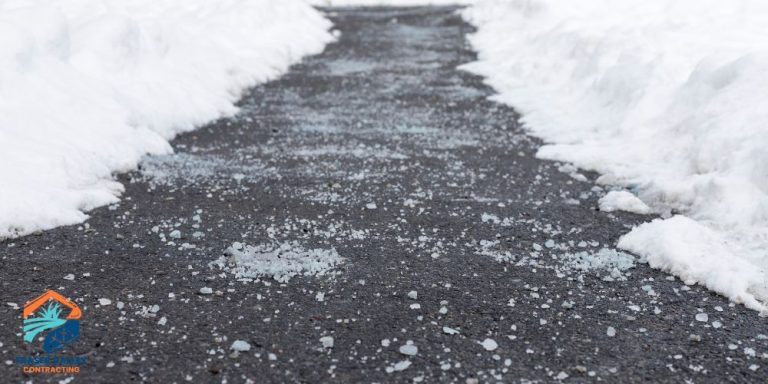
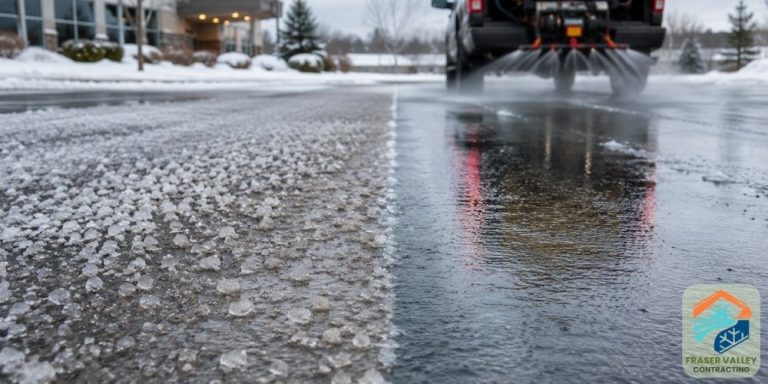
Brine offers another approach. Because it is applied in liquid form, it can begin working immediately and can help prevent ice from bonding to pavement. Our materials indicate that brine can perform at temperatures down to approximately -35°C, depending on the mixture, while using significantly less sodium chloride than traditional rock salt applications.
Brine can also stay bonded to asphalt more effectively than loose rock salt, which can reduce the need for repeated applications under suitable conditions.
That does not mean one material is automatically right for every property or every winter event. The best approach depends on the weather, surface conditions, site requirements, and the areas that need treatment.
Pay Special Attention to Sidewalks and Pedestrian Areas
Roadways tend to get much of the attention during winter, but sidewalks can be just as important when it comes to maintaining a safe and accessible property.
Pedestrians have less traction than vehicles and have little opportunity to correct themselves once they lose their footing. A thin layer of ice that might not be obvious from a distance can make a walkway hazardous.
Entrances, stairs, ramps, crosswalks, loading areas, and pathways between parking areas and buildings deserve particular attention. These are areas where people naturally concentrate, especially during the morning arrival period and at the end of the workday.
Sidewalk deicing should also be approached differently from treating a large parking lot. Pedestrian areas may require more targeted applications and regular inspections because the consequences of untreated ice can be significant.
For properties with multiple buildings or extensive pedestrian networks, having clearly identified priority areas can make winter response more efficient. Main entrances and high-traffic walkways should be considered early in the planning process rather than treated as an afterthought.
Don’t Ignore Freeze-Thaw Cycles
Some of the most difficult winter conditions are not necessarily caused by heavy snowfall. Freeze-thaw cycles can create recurring ice problems even when a property receives very little snow.
For example, snow or rain may melt during the day when temperatures rise. As temperatures drop overnight, that moisture can freeze again and create a layer of ice.
These conditions are particularly challenging because a property may appear relatively clear during one part of the day and become hazardous several hours later.
This is one reason our winter service approach relies on ongoing weather monitoring rather than simply responding to snowfall totals. Ice mitigation can be necessary even when there is little or no snow on the ground.
Treat High-Risk Areas Before Problems Develop
A property does not have to wait for an entire site to become icy before taking action.
Certain areas naturally deserve closer attention. Building entrances, slopes, ramps, shaded walkways, stairs, pedestrian crossings, and areas where water tends to collect can all become problem areas during freezing conditions.
Drainage is another consideration. Water that accumulates on pavement can become ice when temperatures fall. Keeping drainage pathways clear and understanding where water moves across the property can help identify areas that may require additional attention.
This is where a site-specific winter plan becomes valuable. Rather than treating every square metre of a property exactly the same way, a winter contractor can identify priority areas and establish where deicing materials should be applied.
Use Pre-Treatment to Get Ahead of Ice
One of the advantages of proactive deicing is the ability to treat surfaces before conditions become severe.
Pre-treatment can help reduce the bonding of ice and make subsequent snow removal more manageable. It can be particularly useful when weather forecasts indicate conditions that are likely to produce freezing surfaces.
Waiting until precipitation has already frozen onto pavement can make the job more difficult. A proactive application gives the treatment material an opportunity to work before the surface becomes heavily bonded with ice.
At Fraser Valley Contracting, we use weather information from multiple sources along with on-site observations to help determine when proactive applications are appropriate. Winter conditions can change quickly, so timing is an important part of effective ice control.
Understand That Deicing Does Not Eliminate Every Winter Hazard
Even a well-planned deicing program cannot guarantee that every icy condition will disappear immediately.
Weather can change rapidly. Flash freezes, black ice, rapid thaw-refreeze cycles, continued precipitation, and other environmental conditions can create new hazards after a treatment has been completed.
For that reason, effective winter property management involves ongoing monitoring and response rather than a single application.
Depending on weather severity, a site may require more than one visit in a 24-hour period. A property that is safe in the morning may require additional attention later in the day if conditions change.
The objective is not simply to apply a product and leave. It is to monitor changing conditions and respond appropriately.
Keep Records of Winter Services
For commercial property owners and managers, documentation can be an important part of winter maintenance.
Knowing when a property was treated, what service was performed, and which areas were addressed provides a clearer picture of how the winter program is being managed.
Fraser Valley Contracting uses the Yeti Snow Removal app to track and document winter services. Our crews use the system for dispatching, tracking, recording, and reporting, and clients can receive monthly reports detailing service dates, times, and the work performed.
This level of documentation provides greater transparency and helps property managers understand what has been happening at their site throughout the winter season.
Plan for Both Roadways and Sidewalks
A common mistake in winter planning is thinking about the property as one large surface. In reality, different areas have different requirements.
Roadways need to remain accessible for vehicles, including cars, delivery trucks, emergency vehicles, and service vehicles. Parking areas need to provide adequate traction while maintaining access to designated spaces and entrances.
Sidewalks require attention to pedestrian movement, particularly around building entrances, stairs, ramps, and other high-traffic areas.
A comprehensive roadway and sidewalk deicing plan considers how all these areas connect. Clearing and treating a parking lot does little good if the walkway leading from the parking area to the building remains icy.
The same is true in reverse. A clear sidewalk cannot solve the problem if vehicles cannot safely reach it.
Winter maintenance works best when the entire property is considered as one connected system.
Consider a Seasonal Deicing Plan
For businesses and property managers, reactive winter maintenance can make budgeting and planning more difficult. Every weather event becomes another decision about whether service is needed and when someone needs to be called.
A seasonal ice mitigation plan can provide a more proactive alternative.
Fraser Valley Contracting offers both per-visit and seasonal service options. Our seasonal plan is designed around proactive ice control throughout the winter, with weather conditions monitored regularly and treatment applied when ice-forming conditions occur.
This type of arrangement can be particularly useful for properties where consistent winter access is important. Instead of waiting for someone to notice an icy surface and arrange service, the property can be monitored throughout the season according to an established winter plan.
Why Local Winter Experience Matters
Winter weather in the Fraser Valley does not always behave the same way as winter conditions in other parts of British Columbia.
Local properties can experience rain, frost, snow, freezing temperatures, and rapid changes in conditions throughout the season. The right winter strategy needs to account for those changing conditions rather than relying on a one-size-fits-all approach.
Fraser Valley Contracting serves Chilliwack, Agassiz, Abbotsford, Hope, and surrounding communities. Our winter services include commercial and residential snow clearing, roadway and sidewalk deicing, salt and brine applications, and snow pile relocation.
We also operate a versatile equipment fleet that allows our crews to respond to different property sizes and service requirements.
For us, effective winter service comes down to preparation, communication, appropriate equipment, and responding to conditions before they become a larger problem.
A Safer Winter Starts Before the First Major Storm
Roadway and sidewalk deicing is not simply about spreading salt when the pavement becomes slippery. The most effective winter programs look ahead.
That means monitoring the forecast, understanding how temperatures and precipitation can affect the property, identifying high-risk areas, choosing appropriate deicing materials, treating surfaces proactively when conditions call for it, and following up as weather changes.
For commercial properties, strata communities, industrial sites, and residential complexes throughout the Fraser Valley, these steps can make a significant difference in keeping people moving and properties accessible during winter.
At Fraser Valley Contracting, we provide roadway and sidewalk deicing, snow removal, salt and brine applications, and other winter services throughout Chilliwack, Agassiz, Abbotsford, Hope, and surrounding areas.
If your property needs a more reliable plan for managing winter ice, our team can help develop a service approach based on the property, its high-traffic areas, and the conditions it faces throughout the season.