When the first snowfall hits Chilliwack, most people see flakes on the ground. Fraser Valley Contracting sees a full-scale winter operation shift into motion.
Across the Fraser Valley, early-season storms bring unpredictable freeze–thaw cycles, heavy overnight accumulations, and rapidly changing conditions. For businesses, stratas, and industrial sites, that first snowfall often exposes whether they chose the right snow removal provider.
Here’s what actually happens behind the scenes at FVC when winter arrives and why that preparation matters for property managers.
1. Monitoring Weather Long Before the Storm Hits
At FVC, winter operations begin before snow is visible in the forecast.
The team tracks:
- Environment Canada updates
- AccuWeather storm fronts
- Local microclimate behavior from Agassiz to Abbotsford
- Ground temperatures, not just air temperature
This helps predict:
- When brine should be applied.
- When plows and loaders need to be deployed.
- When sidewalks need early clearing.
- Which sites will experience early freeze due to shade, slope, or airflow.
At FVC we are always ready in advance for when the snow season hits the valley.
2. The Dispatch Call: Operators & Shovel Crews Mobilize
Once snowfall is confirmed, operations launch into motion.
FVC deploys:
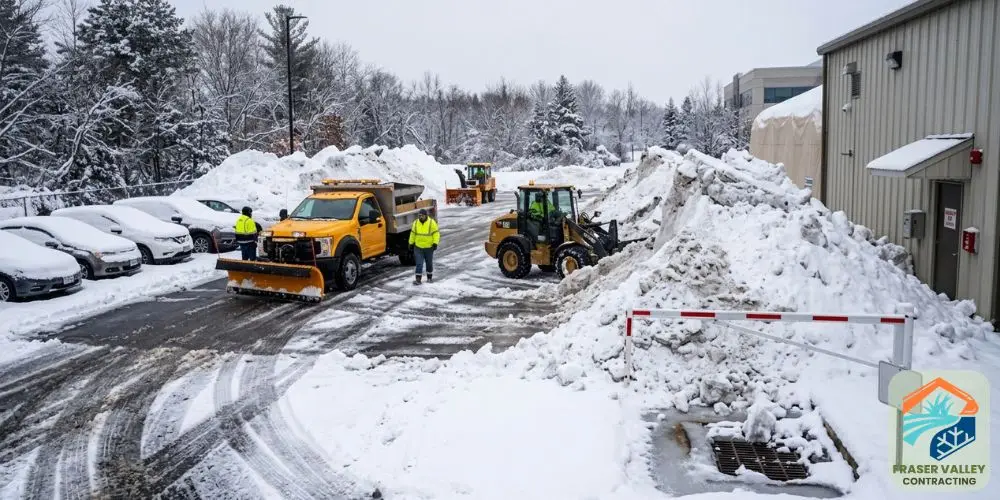
- 40 equipment operators running plow trucks, skid steers, loaders, ATVs.
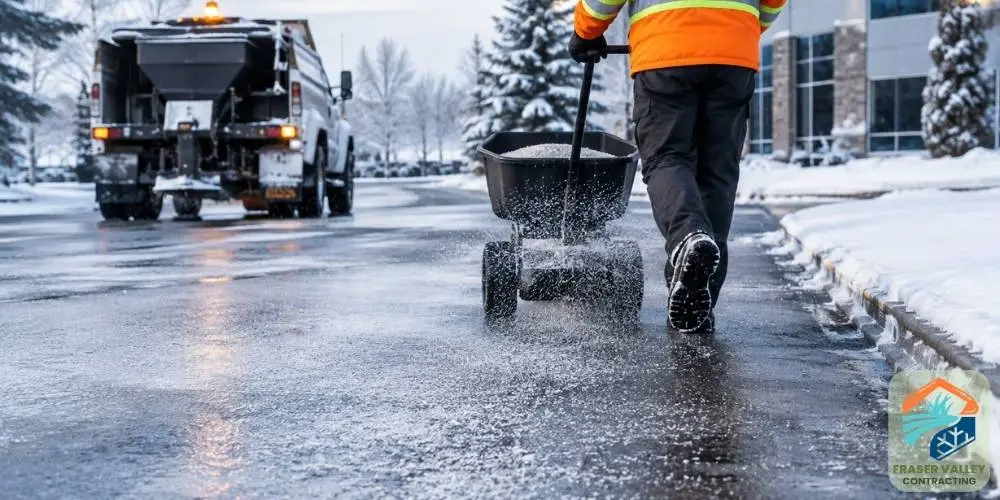
- 50 shovelers handling stairs, walkways, and tight areas.
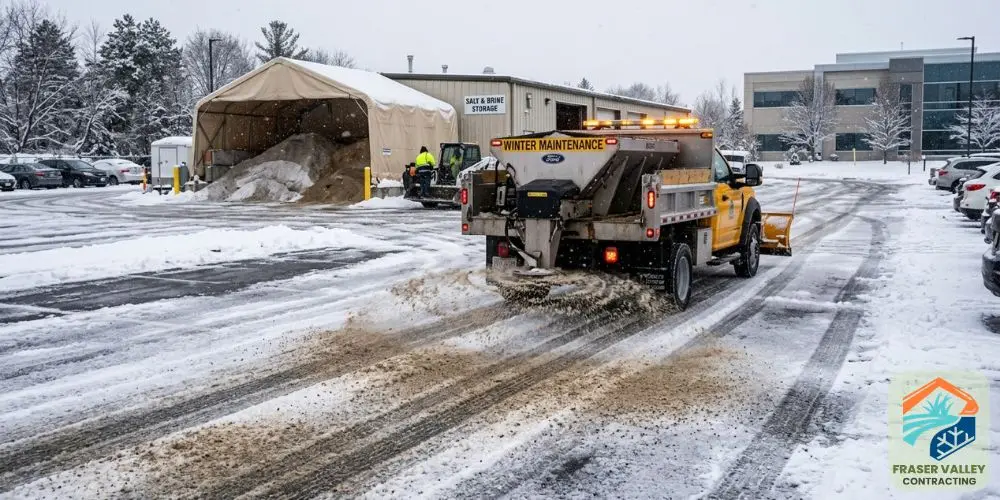
- A full fleet containing plow trucks, loaders, brine sprayers, salt spreaders, and compact blower units.
With 90+ snow professionals on call, the team can service multiple storms, multiple zones, and multiple property types at once without cutting corners.
This is where many smaller operators fall behind. FVC simply has the personnel to scale instantly.
3. Pre-Treatment: Brine Goes Down Before the Snow Sticks
If ground temperatures are dropping and snow is forecasted within 12–24 hours, brine may be applied in advance.
This prevents:
- Ice from bonding to pavement
- Tightly packed snow from freezing overnight
- The need for excessive salt after plowing
FVC uses brine strategically on:
- Parking lots
- Drive lanes
- High-traffic pedestrian routes
- Areas prone to early-morning ice
This is especially important during the first snowfall when melt-and-refreeze cycles are more likely.
4. Real-Time Prioritization: Commercial, Strata & Industrial Sites
Different properties require different approaches.
Commercial sites
Plows and loaders clear large lots early so staff and customers can access the site before business hours.
Strata properties
Shovel teams run multiple passes to keep walkways, stairs, and common paths safe — especially for seniors and high-foot-traffic buildings.
Industrial sites
Loaders and plows maintain shipping routes, loading docks, and yard access, often through overnight operations.
The first snowfall typically brings multiple microstorms. FVC’s scale allows them to handle “round one,” “round two,” and “overnight freeze-up” without delays.
5. During the Snow Event: Multi-Pass Clearing & De-Icing
The first storm of the season sets a pattern for what winter will look like.
FVC crews perform:
- Lot plowing
- Sidewalk clearing
- Stairs & ramp clearing
- Salt or brine application
- Follow-up checks during heavy accumulation
- Additional passes in the early morning hours
The goal is not just to move snow — it’s to keep properties functionally safe throughout the entire storm.
6. Full Transparency Through the Yeti System
Every visit is logged through the Yeti Snow Removal system, giving property managers:
- Timestamps
- Service completion records
- Notes from the crews
- Before/after documentation where applicable
- Confirmation that high-risk walkways and stairs were cleared
This documentation is essential for property managers who need clear proof of service for liability protection. The first snowfall often reveals “problem zones” on a property. FVC documents these and adjusts the service plan accordingly.
Why This All Matters During the First Snowfall
The first storm sets the tone for the entire season.
A snow service provider who:
- underestimates demand
- lacks operators
- runs outdated equipment
- doesn’t pre-treat
- doesn’t track work
- doesn’t show up early will fall behind all season.
Fraser Valley Contracting invests heavily in planning, readiness, and onsite coordination so businesses never have to wonder if their property is safe or accessible.
Winter Is Predictable — If Your Contractor Is Prepared
The first snowfall shouldn’t cause stress, delay operations, or create avoidable hazards.
With $5M liability insurance, 90+ snow professionals, and a fleet built for both large lots and tight strata pathways, Fraser Valley Contracting keeps Chilliwack running smoothly from the very first storm to the last.
Ready for your winter plan? FVC is already preparing.