If you’re planning a landscaping project, you’ve probably heard the terms retaining wall and rock wall used interchangeably. While they can sometimes refer to the same thing, they aren’t actually synonymous. Understanding the difference can help you make the right decision for your property, whether your goal is improving curb appeal, solving drainage problems, or creating more usable outdoor space.
At Fraser Valley Contracting, we build both natural rock walls and structural retaining walls throughout Chilliwack and the Fraser Valley. One of the first questions we ask homeowners isn’t what material they want, but what they want the wall to accomplish. That’s because the purpose of the wall determines how it should be designed, constructed, and installed.
A wall that simply looks attractive has very different requirements than one that’s expected to hold back thousands of pounds of soil for decades.
Understanding Retaining Walls
A retaining wall is built with a specific purpose in mind. Its job is to hold back soil where there’s a change in elevation, allowing sloped land to become level, stable, and usable. Without one, gravity and water will gradually move soil downhill, leading to erosion, drainage issues, and in some cases damage to nearby structures.
Retaining walls are common throughout the Fraser Valley because many properties are built on uneven terrain. Some homeowners need one to create space for a patio or lawn, while others install one to protect their driveway or prevent a hillside from washing away during heavy rainfall.
Unlike decorative landscape features, retaining walls are structural. Every wall must support the weight of the soil behind it while also allowing water to drain properly. If water becomes trapped behind the wall, pressure builds quickly, which is one of the leading causes of leaning, cracking, and premature failure.
This is why a professionally built retaining wall involves much more than placing blocks or rocks on top of each other. Excavation, base preparation, drainage, compaction, and backfilling all play an important role in how long the wall will last.
So, What Is a Rock Wall?
A rock wall refers to the material rather than the function. Instead of concrete blocks or poured concrete, the wall is built using natural stone or large boulders. Depending on how it’s designed, a rock wall can either be decorative or structural.
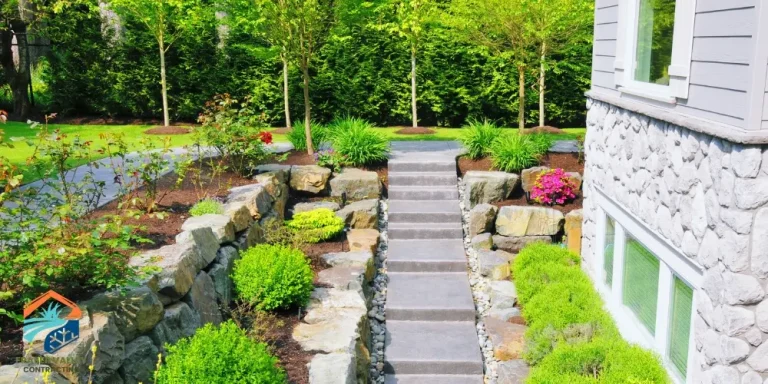
Many homeowners choose natural rock because it blends beautifully with the surrounding landscape. No two stones are exactly alike, giving each project a unique appearance that feels like it has always belonged there. Whether you’re creating a garden feature or supporting a hillside, natural rock offers a timeless look that suits both rural and urban properties throughout British Columbia.
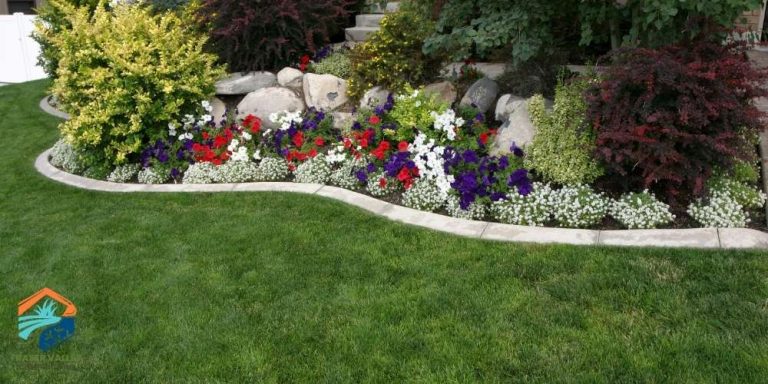
Some rock walls are built purely for appearance. These walls might border a garden, frame a walkway, or create separation between different areas of a yard. They aren’t designed to hold back large amounts of soil and typically don’t require the same level of engineering as a retaining wall.
Other rock walls are engineered specifically to retain soil. In that case, they are both a rock wall and a retaining wall.
That’s where many homeowners become confused.
The Difference Comes Down to Purpose
One of the easiest ways to think about it is this.
A retaining wall describes what the wall does.
A rock wall describes what the wall is made from.
A retaining wall can be built using natural stone, concrete blocks, poured concrete, or other engineered systems. A rock wall simply means natural rock has been chosen as the building material.
If your property has a steep slope that’s causing erosion or preventing you from using your yard effectively, you’ll need a retaining wall. Whether that retaining wall is built from natural rock or manufactured blocks becomes a design decision.
If you’re simply adding character to your landscaping or defining a garden bed, a decorative rock wall may be all that’s required.
Which Option Is Best for Your Property?
Every property is different, which is why there isn’t a single answer that works for everyone.
If your main goal is improving the appearance of your landscape, a decorative rock wall can add texture, depth, and natural beauty without becoming a major construction project. These walls work well around gardens, patios, pathways, and outdoor living spaces.
If your property has a noticeable slope, poor drainage, or erosion problems, you’ll likely need a structural retaining wall instead. A properly designed retaining wall can completely transform a difficult yard into usable outdoor space while protecting your property from future movement.
Some of the most common reasons homeowners invest in retaining walls include:
- Creating level areas for patios or lawns.
- Preventing soil erosion during heavy rain.
- Improving drainage around the home.
- Supporting driveways or walkways.
- Increasing the amount of usable outdoor space.
In many cases, homeowners choose a natural rock retaining wall because it provides the structural strength they need while maintaining the appearance of a natural landscape.
Drainage Is What Makes a Wall Last
When people think about retaining walls, they often focus on the visible part of the project. They compare the appearance of different stones or debate whether blocks look better than natural rock.
In reality, what you don’t see is often far more important.
Every retaining wall needs a solid foundation and a way for water to escape. Without proper drainage, water builds pressure behind the wall every time it rains. Over time that pressure pushes against the structure, causing it to shift, lean, or eventually fail.
That’s why professional installation begins long before the first stone is placed. The site must be excavated correctly, a stable base installed, drainage rock added, and drainage systems incorporated into the design before the wall is completed.
At Fraser Valley Contracting, we believe a retaining wall should be built to last, not simply look good on the day it’s finished. Spending the time to prepare the foundation properly helps avoid costly repairs years later.
Natural Rock or Concrete Blocks?
Both materials have their advantages, and the right choice depends on your property’s style, budget, and overall goals.
Natural rock creates a timeless appearance that’s difficult to replicate. Each stone has its own shape, colour, and texture, allowing the finished wall to blend naturally into the landscape. It’s an excellent choice for homeowners who want a more organic look that complements gardens, trees, and surrounding terrain.
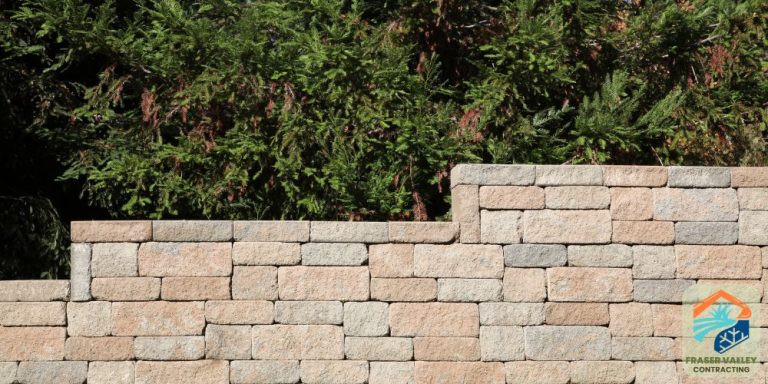
Concrete retaining wall blocks offer a cleaner, more uniform appearance. They’re available in a wide range of colours and styles and are often chosen for modern landscapes where straight lines and consistent finishes are preferred.
Neither material is automatically better than the other. When installed correctly, both can provide decades of reliable performance. The quality of the installation will almost always have a greater impact on the wall’s lifespan than the material itself.
Why Experience Matters
Retaining walls may appear straightforward, but they’re one of the more technical landscape construction projects. Every site presents different challenges, from varying soil conditions to drainage requirements and equipment access.
Choosing an experienced contractor means those factors are considered before construction even begins. Proper planning helps prevent problems that may not become visible until years after the project is complete.
At Fraser Valley Contracting, we approach every retaining wall with the same goal: building something that’s both functional and attractive. Whether we’re installing a natural rock retaining wall for a sloped backyard or creating decorative stone features as part of a complete landscape transformation, we focus on quality workmanship that stands up to the Fraser Valley’s changing weather conditions.
Making the Right Choice
If you’re still wondering whether you need a retaining wall or a rock wall, the answer usually comes down to one question.
Does the wall need to hold back soil?
If the answer is yes, you’ll need a properly designed retaining wall. From there, you can decide whether natural rock, concrete blocks, or another material best suits your property and your vision.
If the wall is simply being added as a landscape feature, a decorative rock wall may be the perfect solution.
Every property has its own challenges, and the best solution isn’t always obvious until the site has been assessed. That’s why we take the time to understand your goals, evaluate the landscape, and recommend an option that balances appearance, durability, and long-term performance.
Whether you’re planning a complete landscape renovation or looking to stabilize a sloped yard, Fraser Valley Contracting proudly serves homeowners across Chilliwack and the Fraser Valley with professionally built rock walls and retaining walls designed to last for years to come.