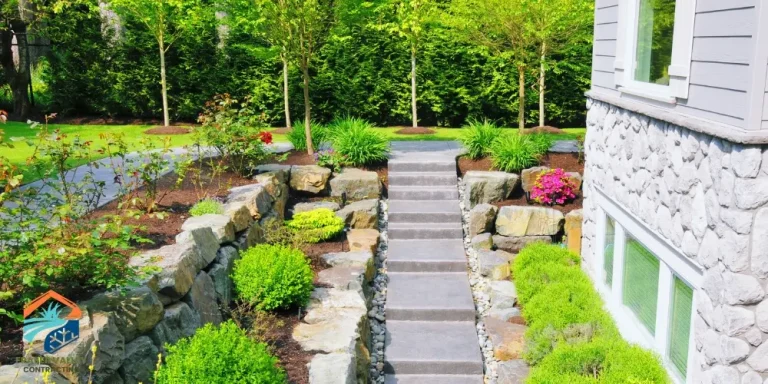
1. Permeable paver patios and walkways (built for BC rain)
Permeable pavers are trending in 2026 because they’re a practical fix for what BC homeowners hate most in spring: water pooling, muddy edges, and patios that settle after a wet winter.
Instead of shedding rainwater like traditional paving, permeable systems are designed to let water pass through the joints into an open-graded aggregate base below—supporting low-impact stormwater design goals many BC municipalities encourage.
If you’re considering permeable, the most reliable approach is to build a “no-pooling patio” around three things: a properly excavated and compacted subgrade, the right aggregate base/bedding, and edge restraint—then include access for maintenance (like underdrain cleanouts where needed).
Also plan where overflow goes: a gravel strip drain along the low edge or a simple rain-garden tie-in can prevent one soggy corner from taking all the runoff.
One important note: permeable doesn’t mean “no slope.” You still want enough grade to avoid surface pooling (common guidance is keeping the surface slope modest—often in the 1% range and not excessive), and you’ll want a maintenance plan so joints don’t clog over time (periodic vacuuming/cleaning is usually the fix).
Done right, permeable paving is one of the best ways to get a cleaner-looking backyard that stays usable through our wet season.
2. “Drainage-first” hardscaping (French drains, channel drains, regrading)
In the Fraser Valley and coastal BC, the biggest reason hardscape projects fail isn’t the stone or pavers, it’s due to high volumes of water. When patios settle, walls lean, and walking surfaces heave, it usually traces back to poor drainage or overlooked flow paths. That’s why “drainage-first” hardscape design is important. Smart builds now start with managing water, not just laying materials.
A drainage-first approach begins with a water-path assessment during your consultation: observe how rain and roof runoff move across the property, where they concentrate, and where water tends to sit. From there, build a properly sized and compacted sub-base depth, clean fall away from structures, and graded transitions between lawn and patio. Then consider strategic upgrades like French drains, channel drains, downspout tie-ins, or a dry well/rain garden that redirects excess runoff to where it can infiltrate harmlessly.
Beginning this work in March — when soils are still wet — actually makes it easier to see issues firsthand and design fixes that last rather than guessing at them when the ground is dry. A drainage-first build not only prevents future problems but often saves homeowners money by avoiding costly repairs down the road.
3. Outdoor “living rooms” (large-format patios + built-in zones)
Instead of small, piecemeal patios, homeowners are asking for large-format outdoor living spaces that feel intentional and usable every day, much like an indoor room. This trend reflects a broader shift toward year-round outdoor comfort, blending entertaining, dining, and relaxation into one cohesive space.
To build an outdoor living room that delivers lasting value, start with the patio layout: designate areas for dining, lounging, and a fire feature while maintaining clear circulation paths so the space feels open and functional. Integrate seat walls or planter walls into the hardscape design — these elements help define zones without relying on moveable furniture and also provide extra seating and structure.
Planning ahead can also pay off, such as: installing pre-wiring or conduit beneath the patio for lighting, outdoor speakers, and future kitchen or bar components. Taking care of utilities during installation makes upgrades easier and keeps the finished space looking clean and uncluttered. This approach transforms a backyard into an outdoor living room that’s both beautiful and practical.
4. Fire features that feel architectural (gas or modern pit kits + seating)
Fire features remain one of the most popular hardscape additions because they naturally anchor outdoor spaces and encourage year-round use, especially in cooler climates like BC’s. But the 2026 trend isn’t just about dropping a fire bowl on a patio — it’s about integrating fire features into the overall design so they feel like a built-in focal point rather than an afterthought.
To do this right, take time to plan where your fire feature will go. A popular choice is to build a dedicated fire node — a round or square paved zone — and surround it with seat walls or a curved bench that creates a sense of place and invites people to gather. Consider bundling a “Fire + Privacy” combo, pairing the fire installation with a screen wall or a run of planter walls to frame the space and create a cozy micro-environment.
In BC’s wet and freeze-thaw conditions, it’s also critical to prepare the sub-base and drainage under the fire feature so the structure stays stable over time; proper compaction and strategic drainage help prevent shifting from frost or saturation. Done thoughtfully, fire features become architectural elements that elevate both the look and use of the backyard.
5. Warm minimalism materials (lighter stone tones, natural textures)
In 2026, the hardscape style that’s resonating most with homeowners isn’t ultra-bright whites or cold industrial greys — it’s warm minimalism. This aesthetic uses soft, earthy materials and gentle tones to create outdoor spaces that feel calm, natural, and timeless. In rainy, cloudy climates like BC’s, these palettes also help outdoor living spaces feel warm and connected to the surrounding landscape rather than stark or overly modern.
When specifying materials, lean toward palettes like sand, taupe, and warm grey for your pavers, wall stone, and caps. These tones work with a wide range of homes and complement both greenery and hardscape lighting beautifully. To keep the look rich — and to avoid a “flat” aesthetic — mix textures subtly: pair a smooth patio field with rough-hewn wall stone, or contrast honed slabs with a textured coping. That little layering of finishes adds depth without complexity.
An added plus for contractors: warm minimalist builds photograph extremely well on Google Business Profiles and social media, helping your projects stand out without having to lean on oversized plants or elaborate gardens.
6. Mixed-material builds (pavers + natural stone + wood/metal accents)
One of the strongest hardscape trends for 2026 is blending materials to create depth and visual interest without cluttering the space. Instead of sticking to a single paver type, high-end designs are layering pavers with natural stone, wood, and even metal accents to give outdoor living areas a custom, architectural feel. This approach makes hardscapes feel intentional and tailored rather than cookie-cutter.
To put this into practice, you can upgrade to options that combine complementary materials such as: contrasting border courses around patios, inlay bands that frame seating areas, stone caps on low walls for a refined finish, or a timber pergola over a paved lounge zone that ties wood and stone together.
A simple guideline to raise perceived value is a “two-material minimum” rule for feature areas. For example, a warm wood overhead with a natural stone patio base, or smooth pavers with a rough natural stone border. Projects that follow this mix-and-match rule tend to appear as more intentional and premium, and they help your property stand out.
7. Retaining walls that double as features (seat walls, tiered yards, planters)
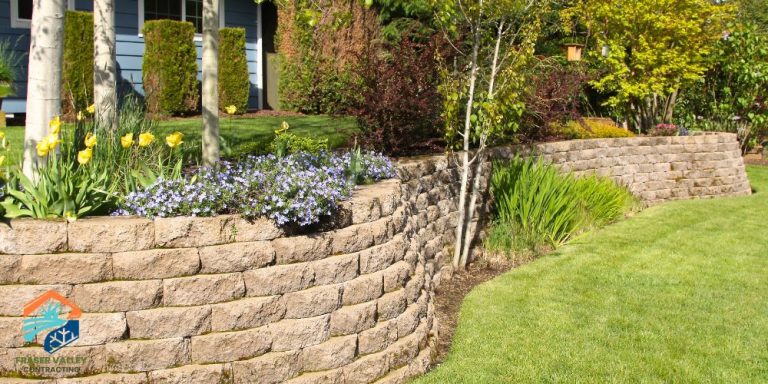
In regions like the Fraser Valley and across BC, sloped lots are everywhere, and with slopes comes the challenge of making outdoor space truly usable. That’s why retaining walls are no longer just functional barriers; in 2026 they’re being designed as multi-purpose features that create flat terraces for patios, seating, and planting, turning a challenging grade into a beautiful asset.
To deliver this effectively, think in terms of full yard transformation rather than isolated walls. A “Tiered Yard Makeover” might include a series of engineered walls with stairs and one or more landing patios, making upper and lower levels both accessible and purposeful. Integrate step lighting or conduits for capstone lighting during construction so that future upgrades (like LED lighting) are easy. This adds safety and extends usable hours into the evening.
Because retaining walls in BC often intersect with building codes, drainage, and soil conditions, make sure your contractor has engineered the wall where required and installed with proper drainage and footings.
8. Outdoor kitchens and “cook stations” (even small ones)
As homeowners look to extend their living space outdoors, outdoor kitchens and cook stations have become one of the most requested hardscape features — and it’s easy to see why. They transform a backyard from a simple seating area into a destination for gathering, cooking, and entertaining.
For many clients, the most practical entry point is focuses on what matters first: a proper base pad, utilities rough-in (gas, power, water), and a prep counter area that feels purposeful even without all the bells and whistles. Then build the space to be modular so homeowners can upgrade over time from a basic grill to adding a mini-fridge, side burners, or a pizza oven down the road.
9. Rain gardens and hardscape-integrated stormwater features
Rain gardens are a practical, environmentally friendly hardscape feature that does more than just look good — they actually manage stormwater right where it falls and help reduce runoff from patios, roofs, and paved areas. Designed as shallow, planted depressions that capture and slow rainwater, these gardens allow stormwater to infiltrate into the soil instead of running off into storm drains or pooling in low spots. This not only helps prevent localized flooding and erosion but also filters pollutants and supports biodiversity with native plantings.
When integrating rain gardens with hardscaping, think of them as a complement to your paved surfaces rather than an afterthought. A great design move is to place a rain garden strip at the edge of a patio or adjacent to downspouts so runoff naturally flows into it, where it’s absorbed and filtered by soil and vegetation. Pairing rain gardens with permeable paving systems and clean gravel transitions creates a polished look that manages water holistically — directing excess rain off impervious surfaces and back into the ground.
This kind of feature distinguishes your outdoor space from standard “pretty pavers” by combining function with form and aligning with modern stormwater-smart landscaping practices.
10. Low-voltage lighting
Landscape lighting can be designed like part of the “outdoor room,” not a last-minute add-on. A good low-voltage plan makes patios and pathways safer, extends how late people actually use the space, and adds that clean “finished” look. The biggest shift is intention: lighting key routes (steps & paths) and then layering in small accents that highlight texture and focal points.
A practical approach is to map an initial layout first—steps, primary walking path, seating zone, and a soft feature (like a wall, tree, or textured stone). Just as important, is to include conduit runs under patios and walls during the build so future lights, speakers, or upgrades don’t require ripping anything up. Builders who pre-wire and stub out conduit make expansions easier, cleaner, and cheaper later.
Conclusion
Spring in BC is the perfect time to plan hardscaping projects because you can see where water collects, where grades fail, and what parts of the yard are underused.
Whether you’re building a permeable patio, upgrading drainage, creating an outdoor living room, or adding lighting and fire features, the common trends in 2026 are keeping materials, layout, drainage, and future-ready prep in mind and putting a plan together from day one so that you can save yourself time and money down the line. This way you get a backyard that looks better and functions better and holds up long-term—so you can enjoy it all summer without a long list of fixes that will need to be done next spring.
Ready to start planning your backyard makeover?