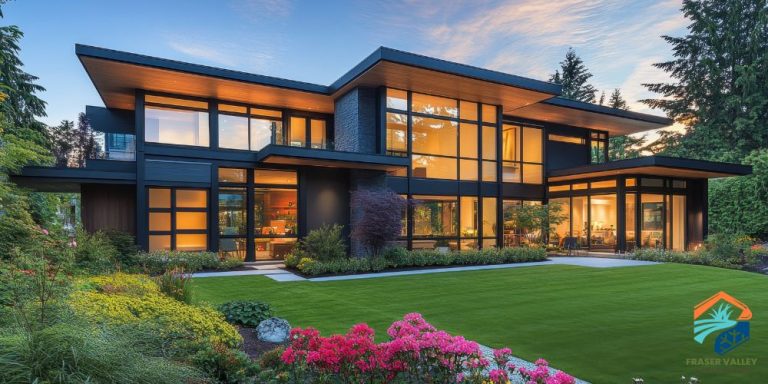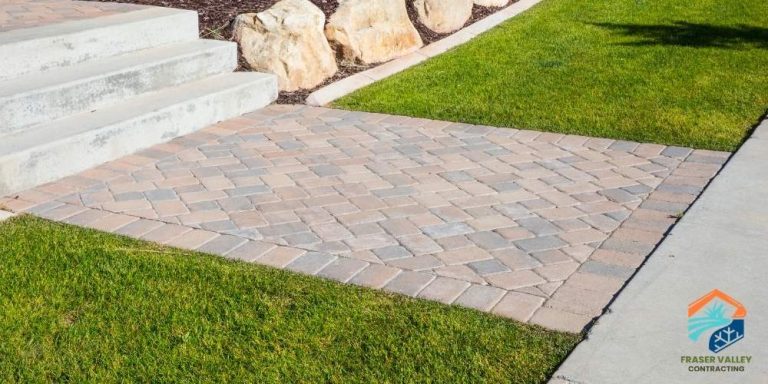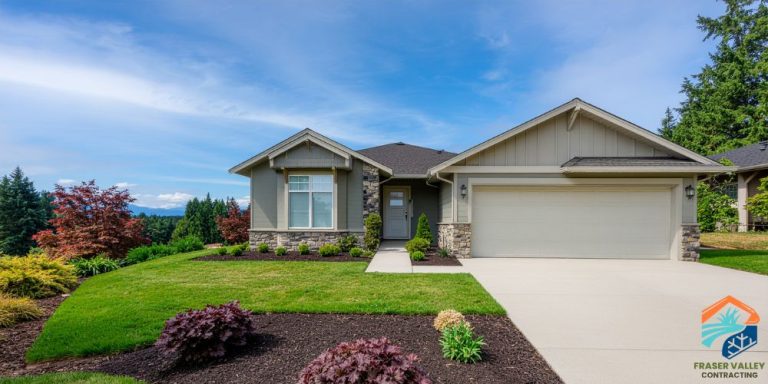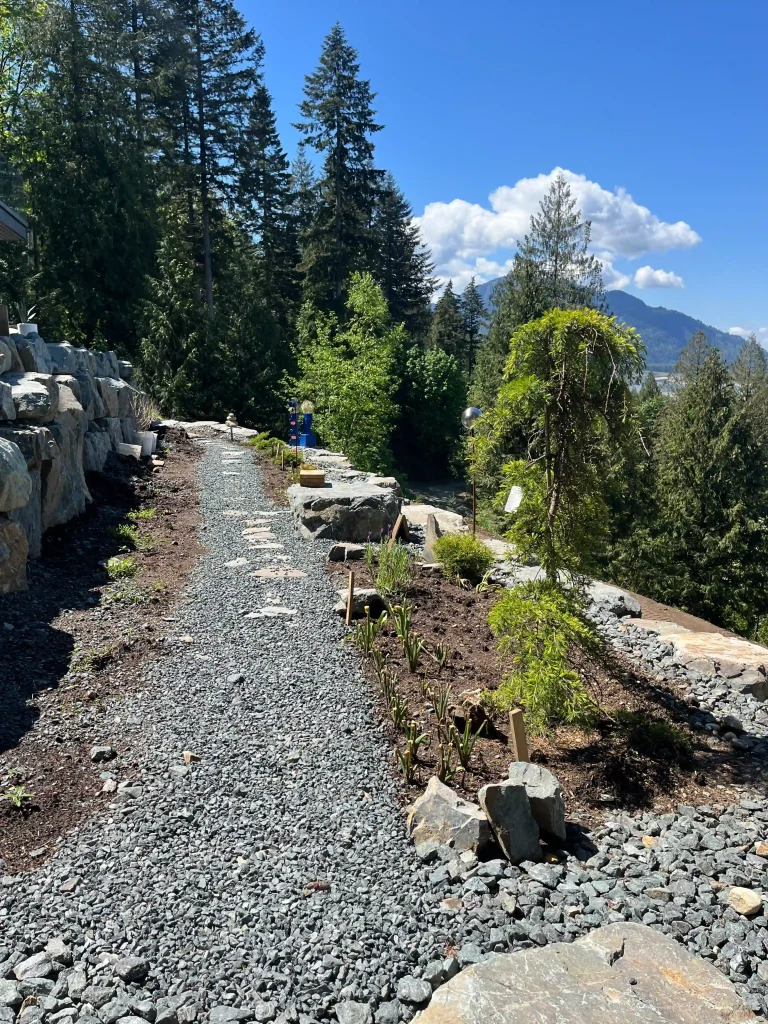
Hardscaping refers to the non-organic parts of your landscape such as driveways, walkways, patios, retaining walls, and steps. In the Fraser Valley, hardscaping isn’t just about appearance. It plays a major role in drainage, safety, and how well your property holds up through rain, freezing temperatures, and flooding.
If you’ve noticed pooling water, shifting pavers, icy walkways, or erosion during recent storms, those are often hardscaping issues — not landscaping ones.
Why Hardscaping Matters More in the Fraser Valley
Our region sees:
- Heavy rainfall
- Saturated soil
- Freeze–thaw cycles
- Periodic flooding in low-lying areas
Poorly built hardscaping can make these problems worse by trapping water, directing runoff toward buildings, or cracking under temperature swings. Proper hardscaping helps control water flow, stabilize ground, and create safer surfaces year-round.
Walkways: Safety First, Not Just Looks
Walkways are one of the most common hardscape features and one of the most overlooked.
Well-built walkways:
- Drain properly instead of icing over
- Stay level through winter moisture
- Make snow clearing easier
- Reduce slip-and-fall risk
If walkways become slippery, uneven, or hold water in winter, that’s usually a base or grading issue that should be addressed before spring.
Driveways Built for Rain and Freeze–Thaw Cycles
Driveways take constant use and constant moisture. In the Fraser Valley, common driveway issues include:
- Cracking after cold snaps
- Sunken sections from water saturation
- Water pooling near foundations or garages
Hardscape driveways should be built with proper base depth, compaction, and slope so water drains away instead of settling in.
Retaining Walls and Grade Control
Retaining walls are often essential in the Fraser Valley, especially on sloped or flood-prone properties.
They help:
- Prevent erosion
- Manage runoff during heavy rain
- Stabilize soil around buildings and walkways
Winter storms are a good time to notice early warning signs like leaning walls, soil washout, or blocked drainage paths.
Winter Is for Planning, Not Pouring Concrete
Most hardscaping construction happens in spring and summer, but winter is the best time to plan.
This is when property owners should:
- Identify drainage problems during real storms
- Note safety issues on walkways and steps
- Review areas affected by flooding or runoff
- Design and budget projects before the busy season
Planning now means better scheduling, better pricing, and fewer rushed decisions later.
What Hardscaping Can Include
Hardscaping covers more than people realize, including:
- Walkways and pathways
- Driveways and parking areas
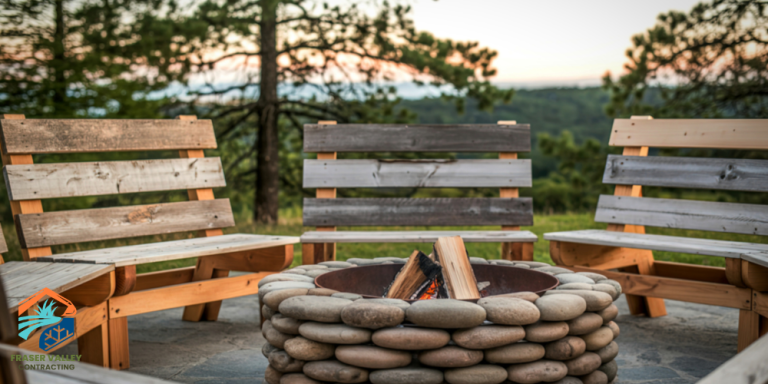
- Patios and outdoor living spaces
- Retaining walls and steps
- Drainage-supporting features integrated into landscapes
If it’s structural, permanent, and non-organic, it’s likely hardscaping.
The Bottom Line
In the Fraser Valley, hardscaping is about function first. The right design protects your property from water damage, improves winter safety, and creates outdoor spaces that last.
If recent storms have exposed drainage, erosion, or safety issues on your property, winter is the right time to start planning smarter hardscaping solutions for spring.