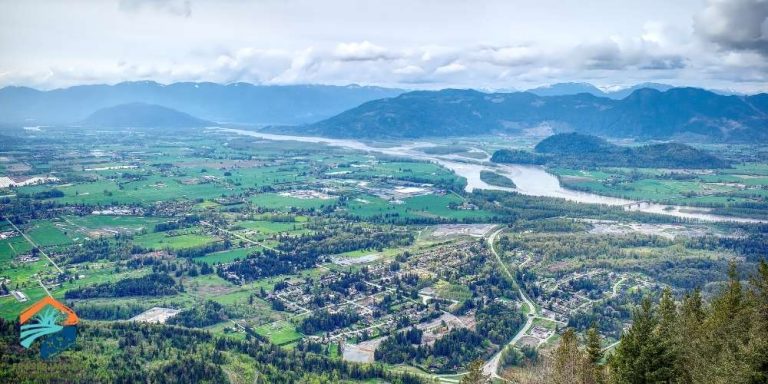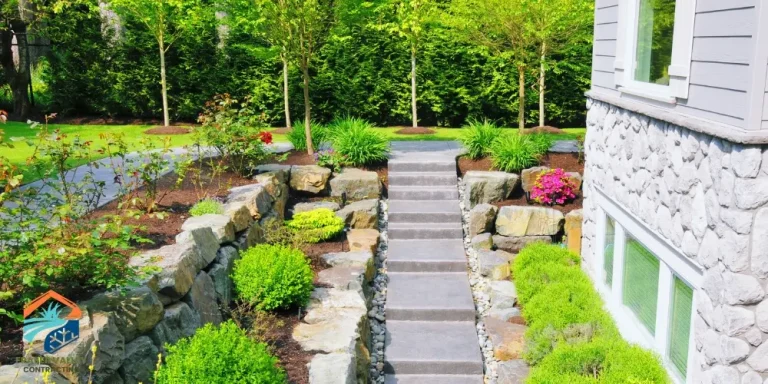
Retaining walls play a much bigger role in the Fraser Valley than just shaping a yard. With heavy rainfall, clay-rich soils, and flood-prone areas like Yarrow and parts of Chilliwack, choosing the right retaining wall material is critical for long-term stability, drainage, and property protection.
A wall that works well in dry climates can fail quickly here if it isn’t built for water movement and soil pressure. Below is a practical breakdown of the best retaining wall materials for Fraser Valley conditions, along with when each one makes sense.
What Fraser Valley Retaining Walls Need to Handle
Before choosing materials, it’s important to understand what they’re up against locally:
- High annual rainfall and prolonged wet seasons
- Freeze–thaw cycles that expand and contract soil
- Heavy, moisture-holding clay soils
- Sloped properties and low-lying flood zones
Because of this, drainage and structural strength matter just as much as appearance.
1. Segmental Concrete Block (SRW Systems)
Best for: Residential yards, tiered landscaping, engineered walls
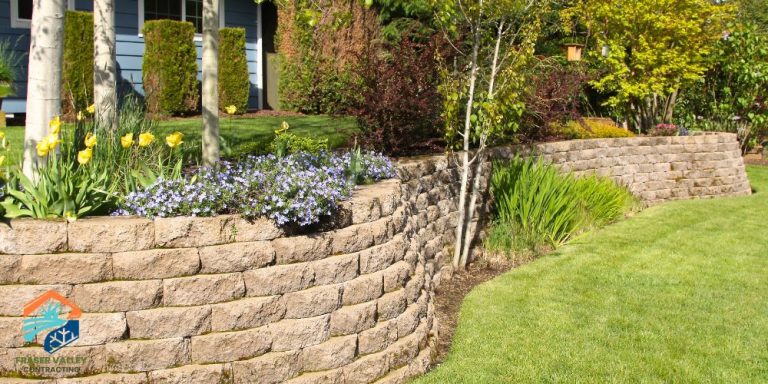
Segmental retaining wall blocks are one of the most reliable options in the Fraser Valley when installed correctly.
Why they work well here:
- Designed to flex slightly with soil movement
- Built-in drainage gaps between blocks
- Can be engineered with geogrid reinforcement for taller walls
Things to consider:
- Proper base prep is critical
- Drain rock and perforated pipe are non-negotiable in wet areas
This is often the best all-around choice for residential properties dealing with slopes or water runoff.
2. Poured Concrete Retaining Walls
Best for: Structural support, tight spaces, modern designs
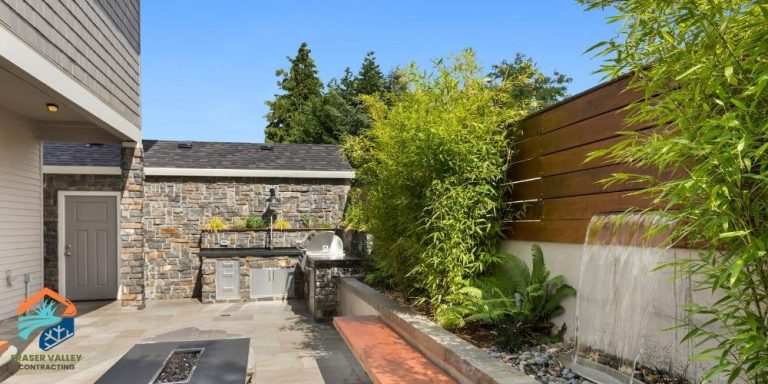
Poured concrete walls offer unmatched strength and a clean, modern look.
Advantages:
- Handles high soil pressure
- Ideal for narrow setbacks or property lines
- Can be formed to precise heights and shapes
Considerations:
- Higher upfront cost
- Requires experienced forming and drainage design
- Cracks can occur if drainage isn’t managed properly
In flood-prone zones or where walls support structures, poured concrete is often the safest option.
3. Natural Stone Retaining Walls
Best for: Aesthetic landscapes, rural properties, long-term durability
Stone walls are common throughout the Fraser Valley and can last decades when built correctly.
Why homeowners choose stone:
- Excellent durability
- Natural drainage between stones
- Blends well with rural and agricultural landscapes
Important note:
Stone walls must be properly keyed in and backfilled — dry-stacked walls without reinforcement can fail in wet soil.
4. Timber Retaining Walls (Use with Caution)
Best for: Short-term or low-height applications
Timber is still used in some residential yards, but it’s generally not ideal for Fraser Valley conditions.
Pros:
- Lower upfront cost
- Quick installation
Cons:
- Rot and moisture degradation
- Shorter lifespan
- Not suitable for flood zones or tall walls
Timber may work for small garden edging, but it’s rarely recommended for structural retaining walls in this region.
5. Rock and Boulder Retaining Walls
Best for: Sloped properties, flood-resistant landscapes
Large rock or boulder walls are increasingly popular where water movement is a concern.
Benefits:
- Extremely durable
- Excellent natural drainage
- Resistant to erosion during heavy rainfall
These walls require heavy equipment and careful placement but perform exceptionally well in high-water environments.
Why Drainage Matters More Than the Material
No retaining wall material will succeed without proper drainage.
In the Fraser Valley, every wall should include:
- Drain rock behind the wall
- Perforated drain pipe
- Proper grading to direct water away
Many retaining wall failures aren’t material failures — they’re drainage failures.
Choosing the Right Wall for Your Property
The “best” retaining wall material depends on:
- Soil type
- Slope height
- Water exposure
- Long-term plans for the property
A one-size-fits-all solution doesn’t exist, especially in a region with such varied terrain and moisture levels.
Final Thoughts
Retaining walls in the Fraser Valley need to do more than look good — they must manage water, resist soil pressure, and stand up to years of wet conditions.
Choosing the right material, paired with proper engineering and drainage, protects not just your landscape, but your home and foundation as well. all the difference.